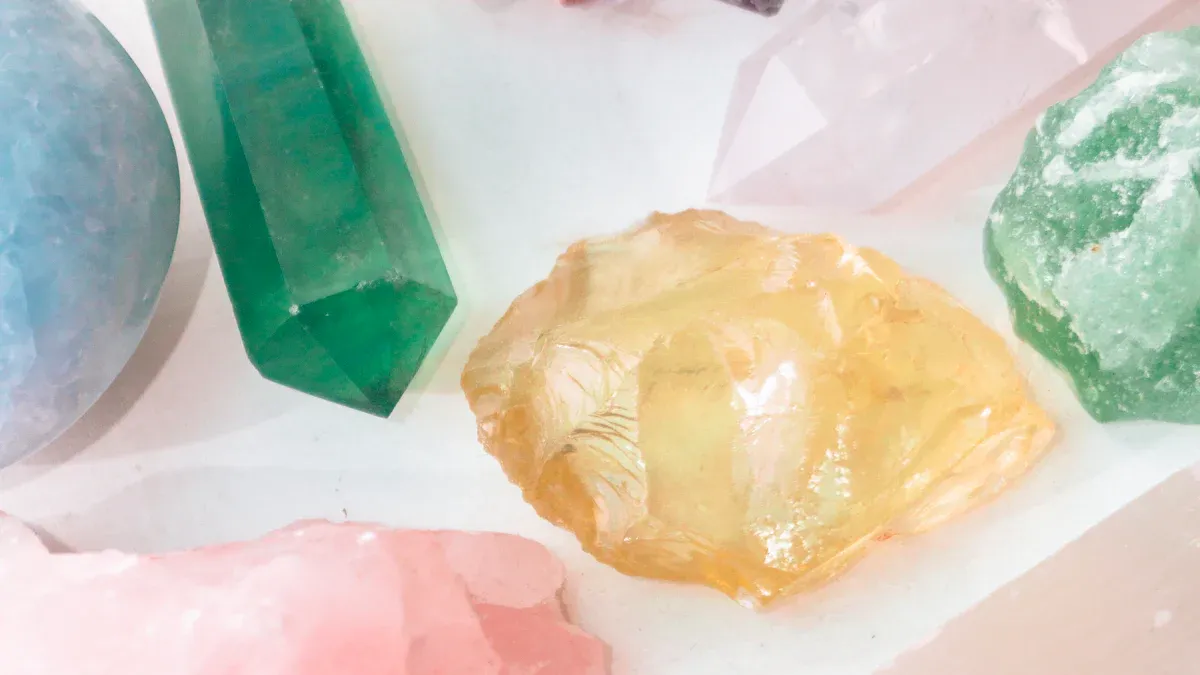
Birthstones hold great significance in many cultures, and they are an essential part of the Gemstone Guide. They represent personal identity and serve as symbols of protection and healing. Ancient Egyptians believed gemstones offered spiritual well-being, while the ancient Hebrews associated them with blessings through the Twelve Tribes of Israel. Each month corresponds to a specific gemstone, each with its own unique meaning. Understanding the meaning behind birthstones can help you appreciate their beauty and the healing properties they may offer, as highlighted in the Gemstone Guide.
Over 20% of people in the UK believe in the healing power of crystals, emphasizing the enduring belief in the benefits of these natural treasures.
Month | Birthstone(s) | Meaning/Significance |
|---|---|---|
January | Garnet | Protection and strength |
February | Amethyst | Calming properties, clarity of mind |
March | Aquamarine | Tranquility and courage |
April | Diamond | Purity, strength, eternal love |
May | Emerald | Rebirth and fertility |
June | Pearl/Alexandrite | Purity and transformation |
July | Ruby | Passion, love, vitality |
August | Peridot | Good fortune and protection |
September | Sapphire | Wisdom and loyalty |
October | Opal/Tourmaline | Creativity and healing |
November | Topaz/Citrine | Strength and resilience |
December | Turquoise/Tanzanite/Zircon | Protection, spiritual awakening, grounding energy |
Key Takeaways
Birthstones represent personal identity and carry unique meanings, enhancing emotional connections.
Each month has a specific gemstone with distinct healing properties, promoting well-being and positivity.
Wearing your birthstone can boost confidence and radiate positive energy, making it a meaningful accessory.
Understanding the significance of birthstones can help you choose thoughtful gifts for loved ones.
Explore the healing properties of your birthstone to enhance emotional balance and reduce stress.
Birthstones by Month
January: Garnet
Garnet, the birthstone for January, symbolizes protection and strength. This gemstone has a rich history, often associated with passion and love. In ancient Egypt, garnet adorned ceremonial jewelry, believed to represent life force and protection. Romans valued garnet for its beauty, using it in signet rings to seal important documents.
Aspect | Traditional Meaning | Modern Meaning |
|---|---|---|
Passion and Love | Associated with romantic love, friendship, and loyalty. | Used as a gift for anniversaries and celebrations of deep connections. |
Protection and Safety | Believed to ward off evil and provide safety for travelers. | Seen as a protective stone that enhances vitality and strength. |
Energy and Vitality | Linked to the root chakra, promoting survival instincts and physical strength. | Thought to rejuvenate and purify the body, aiding in emotional healing and overall well-being. |
Wealth and Prosperity | Historically thought to attract financial success and abundance. | Considered a “stone of business” that aids in wise financial decisions. |
February: Amethyst
Amethyst, the February birthstone, is known for its calming properties and clarity of mind. Ancient Greeks believed it protected against overindulgence, often using it in goblets to prevent drunkenness. In medieval times, soldiers wore amethyst for focus and cool-headedness in battle.
Cultural/Historical Context | Significance |
|---|---|
Ancient Greece and Rome | Believed to guard against overindulgence; used in goblets to prevent drunkenness. |
Medieval Soldiers | Worn for cool-headedness and focus in battle. |
European Royals | Symbol of wisdom and power; used in crowns and scepters. |
Eastern Traditions | Associated with spiritual growth and protection; used in meditation. |
Modern Symbolism | Represents calmness, confidence, and personal growth. |
Amethyst promotes inner power and provides calming energies. It protects against curses and psychic attacks, enhances love, and strengthens relationships. Many people use it for stress relief and meditation, making it a popular choice for those seeking emotional balance.
March: Aquamarine
Aquamarine, the birthstone for March, derives its name from Latin, meaning “water of the sea.” This gemstone symbolizes tranquility and courage. Ancient cultures believed it provided protection at sea, often carved into talismans for sailors.
Aquamarine was thought to calm stormy seas and ensure safe voyages.
In India, gifting aquamarine jewelry to newlyweds is a cherished tradition.
Greeks and Romans viewed aquamarine as a sacred gift from mermaids, ensuring safety at sea.
Aquamarine supports physical healing by reducing stress, which can improve overall health. It also eases fear and anxiety, fostering a positive outlook and helping individuals release past traumas.
April: Diamond
Diamond, the birthstone for April, represents purity, strength, and eternal love. Its allure dates back thousands of years, with the oldest diamonds formed over 3 billion years ago. Initially, diamonds were reserved for the wealthy in India, later becoming fashionable in Western Europe.
The first diamond engagement ring was given to Mary of Burgundy by Archduke Maximillian of Austria in 1477.
Diamonds were believed to enhance energy, thoughts, and intentions, amplifying the effects of other gemstones.
Diamonds promote clarity of thought and help individuals manifest their desires. They are utilized in energy healing to support emotional and physical healing, making them a powerful gemstone for those seeking transformation.
May: Emerald
Emerald, the birthstone for May, symbolizes rebirth and fertility. Ancient Egyptians viewed emeralds as powerful stones that could treat eye diseases and symbolize eternal youth. Aristotle noted their ability to enhance speech and business success.
Emeralds are believed to alleviate stress and enhance emotional resilience. They assist in attracting positive energy and facilitate spiritual awakening. This gemstone nourishes the aura with hope and encouragement, making it a cherished choice for those seeking emotional healing.
June: Alexandrite
Alexandrite, a unique gemstone associated with June, is known for its color-changing properties. Initially, June was represented solely by the pearl, symbolizing purity and wisdom. However, as gemstones became more popular, alexandrite was introduced in the 1950s.
This gemstone embodies balance, transformation, and good fortune. Alexandrite supports nervous system and brain function, enhances blood circulation, and aids with regeneration and cellular healing. It promotes centeredness and mindfulness, making it a valuable stone for personal growth.
July: Ruby
Ruby, the birthstone for July, symbolizes passion, love, and vitality. Historically, rubies were favored by Southeast Asian royalty and gained popularity in medieval Europe. The term “ruby” originates from the Sanskrit word “ratnaraj,” meaning “king of gems.”
Rubies have symbolized regality throughout history, considered fit for royalty and associated with divine favor.
They deepen love and passion, promote emotional balance, and instill confidence and motivation.
Rubies strengthen the cardiovascular system and regulate digestion. They enhance overall vitality and energy levels, making them a powerful gemstone for those seeking emotional and physical healing.
August: Peridot
Peridot, the birthstone for August, is often seen as a stone of renewal, strength, and protection. In Hawaiian legends, peridot is said to be the tears of the volcanic goddess Pele. The Egyptians viewed it as a symbol of the sun, associating it with light and vitality.
Ancient civilizations believed peridot’s golden-green glow held the power of the sun.
Sailors carried peridot for protection during voyages, linking it to safety and guidance.
Peridot is believed to provide emotional protection against negative influences and support individuals during periods of doubt and anxiety. It encourages self-confidence and aids in personal rebuilding processes.
September: Sapphire
Sapphire, the birthstone for September, represents wisdom and loyalty. In ancient Persia, it was believed that the blue sky was a reflection of a giant sapphire, symbolizing its sacredness. Medieval European clergy wore sapphires to signify purity and divine favor.
Kings believed that sapphires offered protection from envy and harm, making them essential in royal jewelry.
Sapphires promote clarity of thought and maintain emotional balance.
This gemstone resonates with the third eye and throat chakras, enhancing intellectual abilities and strengthening focus. Sapphires connect individuals with their higher purpose, making them a powerful tool for spiritual insight.
October: Opal
Opal, the birthstone for October, has a rich history filled with folklore and superstitions. In ancient cultures, opals were associated with good fortune and believed to have magical properties. However, the publication of Sir Walter Scott’s Anne of Geierstein led to a decline in opal sales, as people began associating the stone with bad luck.
Romans viewed opals as symbols of hope, while Greeks believed they granted prophetic abilities.
It is believed that only individuals born in October can wear opals without incurring bad luck.
Opals act as a prism within the aura, enhancing cosmic consciousness, creativity, and emotional healing. They are soothing for emotional wounds and promote right action, making them a cherished choice for those seeking balance.
November: Topaz
Topaz, the birthstone for November, has been valued since the 1500s. Its significance was recognized when the practice of wearing birthstones began. Topaz is known for its healing and protective properties.
Source | Healing/Protective Properties |
|---|---|
St. Hildegard of Bingen | Cured dim vision by soaking topaz in wine and rubbing it on the eyes |
Ancient Greeks | Believed topaz granted invisibility and increased strength |
Ancient Romans | Provided protection during travel, detected poisons, shielded from robbery |
Medieval Times | Cured lunacy, offered mental balance and clarity |
Ancient India | Worn over the heart for beauty, intelligence, and longevity |
Topaz reduces stress and nervous tension, eases depression and anxiety, and promotes youthfulness. It supports digestive health and improves gut function, making it a valuable gemstone for overall well-being.
December: Turquoise
Turquoise, the birthstone for December, has been valued by various civilizations for its protective qualities. Egyptians mined turquoise as early as 3000 BC, associating it with protection and status.
Civilization | Significance of Turquoise | Cultural Beliefs |
|---|---|---|
Egyptians | Mined turquoise since at least 3000 BC, associated with protection and status. | Linked to the sky and motherhood goddess Hathor. |
Persians | Believed their purer turquoise was heavenly, used in turbans, weapons, and mosques. | Called it pērōzah, meaning “victory.” |
Aztecs | Viewed turquoise as sacred, associated with the deity Quetzalcoatl. | Burying rulers with turquoise in their mouth, believing it embodied fire. |
Native Americans | Prized turquoise for ceremonial items, talismans, and currency. | Used by the Apache tribe to ensure accurate aim in hunting. |
Turquoise is believed to support respiratory health and promote emotional calmness. It acts as a protective talisman against harmful influences, especially for travelers. This gemstone symbolizes harmony and creativity, making it a cherished choice for those seeking balance.
Birthstones carry deep meanings and healing properties. They serve as powerful symbols of personal identity and emotional connections. When you gift a birthstone, you enhance bonds with loved ones and create lasting memories.
Here are some reasons why people choose birthstones:
Reason for Choosing Birthstones | Source |
|---|---|
Emotional connections and reminders of loved ones | Mathew Behnam, Samuel B. |
Part of personal identity and meaningful purchases | Cora Lee Colaizzi, Quality Gold. |
Symbolism and positive vibrations associated with gemstones | Theresa Namie, Ostbye. |
You may find that wearing your birthstone boosts your confidence and radiates positive energy. Explore your own birthstone and consider its significance in your life or as a thoughtful gift for someone special.
Remember, each gemstone holds unique properties that can influence your emotions and mental state positively.
FAQ
What is a birthstone?
A birthstone is a gemstone associated with each month of the year. Each stone carries unique meanings and healing properties, often linked to personal identity and emotional well-being.
How can I choose a birthstone?
You can choose a birthstone based on your birth month or personal preference. Consider the meanings and properties of each stone to find one that resonates with you.
Can birthstones be used for healing?
Yes, many people believe that birthstones possess healing properties. They can promote emotional balance, reduce stress, and enhance overall well-being when worn or carried.
Are there alternative birthstones?
Yes, some months have alternative birthstones. For example, June has both pearl and alexandrite. You can choose either based on your preference or the properties you seek.
How should I care for my birthstone?
To care for your birthstone, clean it regularly with a soft cloth. Avoid harsh chemicals and extreme temperatures. Store it separately to prevent scratches from other jewelry.