

Cracked heels are more than a cosmetic annoyance. They snag on socks, catch on sheets, and make every step on a bare floor feel like a small negotiation. Whether you stand all day at work, live in a dry climate, or just inherited your grandmother’s sandal season habits, the right cream changes how your feet feel within weeks.
This roundup covers eight options across the spectrum: high-strength urea sticks for stubborn calluses, richer creams with skin-barrier ingredients like ceramides and shea butter, a gentle formula designed for diabetic skin care routines, and even an antiperspirant lotion for feet that sweat through everything. Each entry breaks down who it fits and where it falls short.
A Closer Look At The Lineup

ZyraGloz Urea Cream Stick 60% with Salicylic Acid
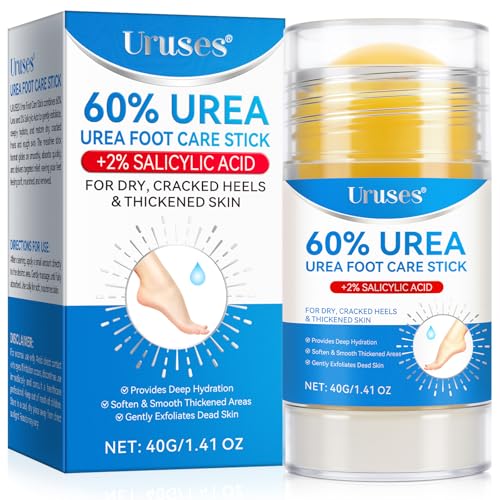
Uruses Urea Cream 60% Foot Care Stick

flasture 60% Urea Foot Cream Stick 1.4oz

URQT 42% Urea Foot & Hand Cream

PROJECT 701 Urea Cream 40 Percent, 4.3 oz

HealthWise Diabetic Foot Cream, 4 oz

Certain Dri Antiperspirant Foot Lotion 1.3 oz
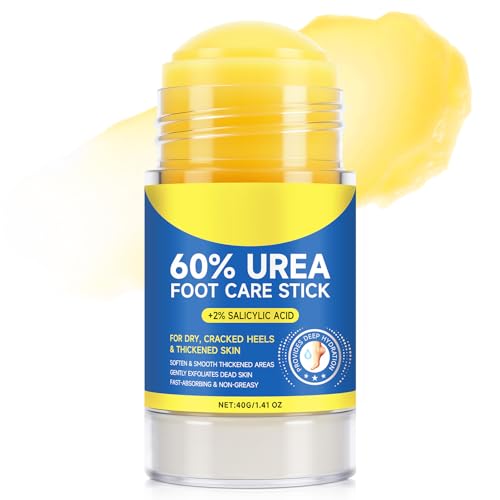
FANSHI Urea Cream Stick 60%
More Details On Our Top Picks
This stick pairs 60% urea, a humectant that pulls water into thickened skin, with 2% salicylic acid, which loosens the dead cells that make calluses feel like armor. That combination targets the kind of heel damage you notice when sandals come out of storage. Anyone who stands on concrete floors all day will recognize the problem it’s built for.
The solid format matters more than people expect. There’s no squeezing a tube with slippery hands or wasting product on a cotton pad, and the twist-up design keeps fingers clean.
What Pays Off
- High urea concentration softens thick, hardened heel skin rather than just coating it
- Salicylic acid works alongside the urea so flakes lift without aggressive scrubbing
- No-mess stick application means you can treat heels right after a shower without cleanup
- Doubles as a treatment for rough elbows and knees, stretching one purchase further
- Portable enough to keep at a desk or toss in a carry-on
Things To Consider
- At this strength, some users report mild tingling during the first week of daily use
- A stick holds less product than a jar, so heavy users may go through it faster than expected
Key Specs
Who It Suits Best
You’ll get the most from this if deep, established cracks are your main complaint and you want a strong, low-fuss daily treatment.
Where Another Pick Suits Better
Shoppers with thinner or easily irritated skin may prefer the flasture stick, which leans on a gentler exfoliation angle at the same strength level.
Where the ZyraGloz stick leads on raw strength, the Uruses version competes on convenience. Same core chemistry, 60% urea with 2% salicylic acid, wrapped in a format built for hotel bathrooms and gym lockers. Frequent flyers will appreciate that a solid stick never counts against liquid limits.
The manufacturer positions absorption speed as a selling point, and that tracks with the stick format generally: less product sits on the surface, so socks go on sooner. Night-shift nurses and anyone dressing in a hurry benefit from that turnaround.
Benefits That Matter
- Twist-up applicator keeps the routine quick before work or after workouts
- Keratin-softening action targets the protein buildup behind stubborn calluses
- Works on hands and knees too, useful for gardeners and gym regulars
Worth Noting
- Stick packaging offers less control over how much product reaches very wide heel areas
- Store it away from hot cars and sunny windowsills, since solid balms can soften in heat
Made For
Commuters and travelers who want serious strength in a format that survives a backpack without leaking anywhere.
Consider Something Else When
For a larger volume of cream at home, the PROJECT 701 tub-style option gives you more product per purchase for nightly foot-soak-and-treat sessions.
Not everyone wants to start at maximum intensity, even when the label says maximum strength. The flasture stick keeps the 60/2 formulation but frames itself around comfort: melting flakes gradually instead of stripping them, with less of the sting some stronger creams are known for. First-time urea users often report better adherence to a routine when the product doesn’t burn.
At 1.4 ounces it’s a modest size, closer to a lip balm scaled up than a jar of cream. That makes it easy to commit to, and easy to finish, which honestly helps build the habit.
Useful Touches
- Gentler exfoliation profile suits skin that reacts to harsher scrubs
- Penetrating balm texture aims at thick skin rather than sitting on top of it
- Single-stick packaging keeps the price of entry low for trying urea treatments
Trade Offs
- One 1.4oz stick won’t last long for two-person households treating multiple rough spots
- Slower visible results compared with heavier creams, based on commonly reported experiences
Right Fit For
Anyone new to chemical exfoliation on their feet who wants results without committing to a big tub right away.
Look Elsewhere When
Established callus sufferers needing maximum coverage per session will find the FANSHI stick’s straightforward high-strength approach a steadier match.
Step down from 60% urea and you trade a little softening power for a much richer supporting cast. The URQT cream layers 5% vitamin E, an antioxidant that supports skin under constant friction, with tea tree oil, aloe vera, and shea butter for cushion and slip. It reads less like a treatment and more like a repair moisturizer with real exfoliating muscle behind it.
In practice, that balance suits cold-weather hands as much as summer feet. Office workers whose knuckles crack every January get two jobs out of one jar.
What Works In Its Favor
- Shea butter and aloe give the cream a cushioning feel the pure sticks lack
- Vitamin E adds antioxidant support for skin that takes daily wear
- Tea tree oil brings a clean scent many users prefer over medicinal smells
- 42% urea still qualifies as high strength while feeling gentler than 60% formulas
- Cream format spreads efficiently over large areas like both heels in one pass
Minor Gripes
- Richer texture means waiting longer before putting on socks, especially in warm rooms
- Jar packaging requires dipping fingers in, so keep hands clean or use a small spatula
Core Details
Who Will Love This
People fighting dryness on several fronts at once, heels, hands, elbows, knees, who want one well-stocked jar instead of four products.
Swap It Out When
Nighttime users wanting a lighter, faster-absorbing layer under socks may find the PROJECT 701 lotion texture more agreeable.
The 4.3-ounce size is where this one earns its spot. Compare that with the 1.4oz sticks earlier in the list and the math gets obvious fast: nightly applications across two feet add up, and a generous tub keeps the habit affordable. Ceramides, lipids that help rebuild the skin’s natural moisture barrier, sit alongside hyaluronic acid and peptides here, giving the formula a barrier-first angle the sticks don’t attempt.
Forty percent urea remains firmly in treatment territory, so you’re not sacrificing much strength for the extra volume.
Advantages To Know
- Ceramides support long-term barrier health, not just overnight softening
- Hyaluronic acid and peptides round out a moisture-focused ingredient deck
- Large tub suits couples or anyone treating feet and hands daily
- Salicylic acid provides the exfoliating counterweight to all that hydration
Points To Note
- Tub packaging demands clean fingers or a scoop to keep the contents fresh
- Lower urea percentage than the sticks means slower progress on severe calluses
Quick Facts
Built With In Mind
Routine-driven users who apply cream every night and want a cost-effective supply that lasts a full season.
Another Choice May Suit
Diabetic shoppers prioritizing a simplified, fragrance-conscious formula should look at the HealthWise cream instead.
Diabetic skin needs a different playbook. Fragrance, dyes, and harsh actives that ordinary foot creams lean on can be poor matches for sensitive feet, and that’s precisely the gap this 4-ounce cream fills. The formula skips parabens, dyes, phthalates, and added scent, keeping the ingredient list deliberately plain.
Its job is protective rather than corrective: sealing moisture into chapped, cracked skin and offering temporary relief for rough patches. Anyone managing diabetic foot care as part of a broader routine, ideally alongside guidance from a healthcare provider, will understand why that restraint matters.
A Few Highlights
- Formulated without added fragrance, dyes, parabens, or phthalates
- Seals in moisture to support comfortable, hydrated skin between applications
- Provides temporary protection for chapped and cracked areas on the feet
- Comes with detailed usage directions, helpful for structured care routines
Small Caveats
- No urea or salicylic acid, so it won’t dissolve established calluses the way higher-strength picks do
- Designed for dry-skin support, not as a substitute for professional foot care
Details At A Glance
Whose Shelf It Belongs On
Adults managing diabetic dry skin who need a plain, gentle moisturizer they can apply consistently without irritation worries.
Reach For A Different Pick When
Tough callus removal calls for chemistry this formula intentionally lacks, making the ZyraGloz 60% stick the better tool for that specific job.
Dry feet aren’t always about missing moisture; sometimes the problem is the opposite. Sweaty feet soften skin, breed odor, and ruin leather insoles, and none of the creams above address that. The Certain Dri lotion approaches foot care from the sweat side, offering day-long wetness management in a lightweight lotion that absorbs without residue.
Runners, hikers, and anyone whose shoes spend eight hours sealed around busy feet know the difference dry socks at 3 p.m. can make. At 1.3 ounces it travels easily and slots into a morning routine beside deodorant.
A Few Strong Suits
- Designed for around-the-clock sweat management on the feet
- Fast-absorbing, non-greasy texture means no slipping inside shoes
- Helps reduce odor tied to perspiration, a quiet quality-of-life upgrade
- Small footprint fits gym bags, desk drawers, and carry-ons
Honest Caveats
- This manages sweat, not dryness, so it won’t soften cracked heels on its own
- Some antiperspirant users report needing a few days of consistent use before noticing the full effect
Who Should Grab It
Athletes, warehouse workers, and hot-climate commuters whose main foot complaint is dampness and odor rather than cracking.
Not Your Match When
Dry, flaky heels need emollients instead, and the URQT 42% cream handles that side of the problem far better.
The last stick in the lineup keeps things simple: 60% urea paired with 2% salicylic acid in a pocketable solid. Compared with the ZyraGloz and Uruses sticks, the pitch here leans on versatility. One stick covers feet, hands, elbows, and knees, which appeals to minimalists who’d rather own one hardworking product than three single-purpose ones.
Standard drugstore foot creams typically run far lower on urea, so the concentration gap is real. Thickened patches respond differently to a formula built for them.
Bright Spots
- Concentration well above typical retail foot creams for tackling thickened skin
- Salicylic acid complements the urea by lifting dead surface cells
- Solid stick design slips into pockets and purses without leaking
- One product serves several body areas, trimming the bathroom shelf clutter
Room For Improvement
- Minimal published detail beyond the headline actives, so ingredient-curious shoppers have less to review
- Like any solid balm, keep it capped tightly or the surface can dry out over months of use
Feature Snapshot
The Right Fit
Streamlined-routine types who want one maximum-strength stick doing double duty across feet, hands, and elbows.
A Better Fit Elsewhere
Shoppers who value a fuller published ingredient story may feel more confident with the PROJECT 701 tub and its documented barrier-supporting blend.
What Matters Most Before Choosing A Foot Cream
Match The Strength To The Problem
Urea percentage is the number that separates maintenance products from genuine treatments. Formulas around 10 to 20% mostly moisturize, while anything from 40% upward actively softens keratin, the protein that builds up into calluses. Deep cracks and years-old calluses respond best to the 60% tier.
First-time users sometimes jump straight to maximum strength and get discouraged by tingling. Starting at 40 to 42% builds tolerance comfortably.
Consider The Format You’ll Actually Use
Sticks win on cleanliness and portability, jars win on volume and spreadability, and lotions absorb fastest. The honest question is where your routine happens. A bedside jar encourages thorough nighttime application, while a stick lives happily in a gym bag.
Respect Special Skin Situations
Diabetic foot care calls for simpler, fragrance-conscious formulas and professional guidance, not maximum-strength exfoliation. Sweat-prone feet present a different issue entirely, one that antiperspirant lotions address better than any emollient.
Read The Supporting Cast
Ceramides, shea butter, vitamin E, and hyaluronic acid determine whether a cream merely softens today or helps skin hold moisture tomorrow. Treatment strength plus barrier support is the combination worth paying attention to.
Key Considerations Across These Picks
Traps Shoppers Fall Into
The most common mistake is buying a light moisturizer for a heavy callus problem, then deciding nothing works. Check the urea percentage first, before the marketing language. Another frequent slip is applying once, seeing no change, and quitting; these products need consistent daily use over weeks to show what they can do.
The Case For Spending Up
Higher-tier formulas justify their cost with secondary ingredients, ceramides, peptides, vitamin E, that support the skin barrier between exfoliation cycles. A budget stick handles the immediate softening, but a well-built cream reduces how often the problem returns. For chronic dryness, that difference compounds over a year.
Frequently Asked Questions
How quickly do urea foot creams show results?
Most people notice smoother texture within one to two weeks of daily use. Deeper cracks usually take several consistent weeks to improve noticeably.
Can I use a 60% urea cream on my hands?
Yes, and the sticks in this roundup are labeled for hands, knees, and elbows as well. Hands tend to be more sensitive, so start with once-daily application.
Is salicylic acid safe for cracked heels?
At the 2% level common in these products, it’s widely used to loosen dead skin on feet. Mild tingling can occur early on, and broken or bleeding skin is a reason to wait until it closes.
Should diabetics use standard foot creams?
Fragrance-light, dye-free formulas designed for diabetic skin are the safer default choice. Checking with a healthcare provider about any new foot care product is always wise.
Do I need to soak my feet before applying?
Applying after a warm shower or bath helps the cream penetrate softened skin. Soaking isn’t required, though it does seem to improve how well the product absorbs.
Closing Thoughts
There’s no single right answer here, only the right match for your feet. Severe calluses point toward the 60% sticks from ZyraGloz, Uruses, flasture, or FANSHI, while all-over dryness suits the richer URQT and PROJECT 701 creams. Sensitive or diabetic skin belongs with HealthWise, and sweaty feet belong with Certain Dri. Whichever direction you go, consistency beats intensity: a modest cream applied nightly will outrun a strong one used twice a month. Your heels will thank you by spring.
