

A swollen face after a salty dinner, a mid-afternoon headache, a sunburn that stings before bed. Cold therapy on the face has a long track record for calming puffiness and easing that tight, flushed feeling. The five picks below cover different cooling formats, from silicone molds to stainless steel globes, so you can match the tool to your routine and skin type.
A Snapshot Of The Selections

ZPU Reusable Silicone Ice Facial Roller (Black)

MAANGE Stainless Steel Ice Roller Massager (White)

Fronnor Cooling Face Roller for Puffiness
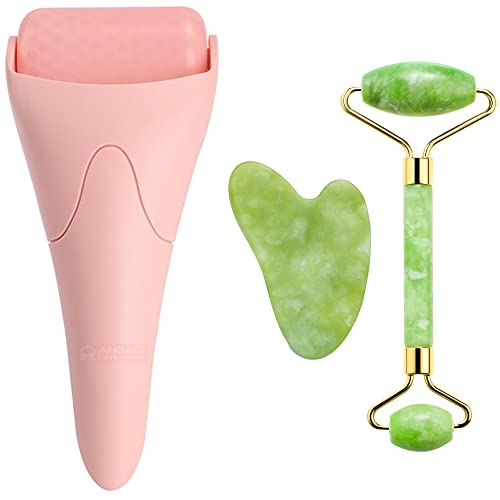
AECW 3-in-1 Natural Jade Roller and Gua Sha Set

pfefe Unbreakable Stainless Steel Cryo Sticks
The Strengths Of Each Pick
The ZPU entry is a two-part tool: a silicone mold that freezes water into a solid roller, plus the handle to roll it across skin. The food-grade silicone means you skip the hassle of filling flimsy plastic molds and worrying about leaks in the freezer.
For anyone easing into cold skincare, the closed design is forgiving. You freeze the whole unit, twist off the cap, and the molded ice glides without drips. Compared with the open stainless heads covered below, there’s less metal-on-skin sensation, which some people find easier on sensitive areas.
Notable Gains
- One-piece silicone mold keeps the rolling surface contained, so you get a clean glide with almost no melt runoff on your collar.
- BPA-free silicone holds its shape after repeated freeze-thaw cycles, so you avoid the warping that thin plastic molds tend to develop over time.
- The leak-proof build means you can toss it in a freezer bag for travel without worrying about a watery mess.
- Works on a wider surface than a pinpoint globe, so a full cheek-to-jaw pass takes only a few seconds.
Trade Offs
- The roller needs several hours in the freezer to fully set, so last-minute use right before a meeting is not realistic.
- As the surface melts, the diameter of the ice slowly shrinks, so the chill fades faster than a sealed metal head would.
Whose Shelf It Belongs On
Beginners building a first cold-skincare routine, and anyone with sensitive skin who prefers a cushioned surface over cold metal.
Look Elsewhere When
The MAANGE stainless roller suits you better when tension headaches are the main reason you reach for a cold tool, since metal holds its chill without prep.
The MAANGE roller takes a different angle: a sealed stainless steel head filled with internal cooling beads. You store it in the freezer, pull it out, and the metal surface stays cold long enough to work across the temples, jaw, and forehead in one pass.
For shoppers chasing tension relief rather than cosmetic puffiness, the broad metal face spreads pressure without the rolling motion doing the work. It also pulls double duty after sun exposure, where the cold head can take some of the sting out of tight, warm skin on the neck and cheeks.
Features That Help
- Stainless head with internal ice beads keeps the surface cold for several minutes per pull from the freezer, longer than a melting silicone mold.
- Sealed construction eliminates drip mess, so you can use it standing up at the bathroom mirror without a towel.
- Curved shape fits the temple and cheekbone, the spots where tension tends to pool after long screen sessions.
Points To Note
- Direct metal contact can feel intense on freshly exfoliated or reactive skin, so sensitive users may want a thin serum barrier.
- The handle does not detach, so the full unit goes in the freezer, taking up more shelf space than a compact globe set.
Key Product Details
Who Will Love This
People who deal with regular tension headaches, screen-related eye strain, or post-sun tightness and want a no-prep tool at the ready.
Swap It Out When
The Fronnor roller makes more sense for someone focused on a daily brightening routine, since its lighter build is easier to incorporate into a multi-step regimen.
The Fronnor roller is built for people who want a quick morning pass before skincare, not a five-minute ritual. Its lightweight frame and standard cooling head keep the tool approachable for daily use, especially around the under-eye area where puffiness tends to settle overnight.
Where the ZPU focuses on the mold-and-freeze novelty and the MAANGE leans into tension relief, this one sits in the middle: a straightforward roller aimed at glow and circulation. Owners commonly pair it with a serum, letting the cool head carry product across the skin instead of pressing it in with fingers.
Practical Advantages
- Lightweight handle reduces wrist fatigue during longer sessions, so a full face and neck pass stays comfortable.
- Small roller head navigates the under-eye hollow and the sides of the nose, where larger surfaces miss.
- Glides well over serums and moisturizers, so the cold contact happens without dragging or pulling delicate skin.
Honest Caveats
- Cooling duration depends on freezer temperature, so users in shared fridges with frequent door openings may notice shorter chill windows.
- No detachable head, so cleaning means wiping the whole handle, which can be awkward around the joint where the head meets the frame.
Right Fit For
Daily routine builders who want a quick under-eye and cheek pass each morning without overthinking storage or prep.
Consider Something Else When
The pfefe cryo sticks are a better match when you want two-handed, targeted contouring along the jaw and cheekbone rather than a single roller pass.
The AECW set treats cold skincare as a layered ritual rather than a single motion. You get a jade roller, a gua sha tool, and a silicone-bead cooling roller, all aimed at a short daily sequence. The jade pieces handle the lifting and contouring passes, while the cooling roller comes in for the final soothing step.
Jade has a softer thermal feel than steel, so it stays cool on the counter without a freezer. The included cooling roller covers the cold-therapy portion, keeping the set useful even for people who do not want to commit to a freezer-stored tool as their main pick.
Useful Touches
- Three tools in one package let you mix rolling, scraping, and cooling in a single five-minute routine.
- Natural jade stone gives a smooth, dense glide that does not require any freezing time before use.
- The cooling roller’s internal silicone beads hold chill longer than a bare ice surface, so the cold step does not end after thirty seconds.
Small Caveats
- Jade and gua sha tools work best with a facial oil or slip product, so you may need to add a step to your existing routine.
Who Should Grab It
Routine-focused enthusiasts who already practice gua sha or want to learn it alongside a cooling step, and gift-givers shopping for someone exploring facial massage.
A Better Fit Elsewhere
The ZPU silicone mold is the simpler entry for anyone who wants cold therapy without learning a scraping technique first.
The pfefe entry is a pair of wands rather than a single roller. Each wand has a rounded stainless tip that you chill in the fridge (the maker notes around ten minutes of warmup is enough to avoid a too-cold shock on bare skin), then glide along the under-eyes, jaw, and brow bone.
Two-handed use gives you symmetry that a single roller cannot match. You can hold a wand in each hand and work both cheekbones at the same time, which speeds up the routine and helps you apply even pressure on both sides of the face.
Useful Highlights
- Stainless steel construction resists the cracking that glass-filled cryo tools can develop after drops on a hard countertop.
- Two wands let you work both sides of the face at once, cutting the routine in half for early-morning sessions.
- Narrow tip reaches the corner of the eye and the edge of the nostril, where wider rollers cannot contour closely.
Potential Drawbacks
- Direct contact on bare skin can feel sharp on sensitive areas, so most owners report using a serum or oil as a glide layer.
- Stainless picks up fingerprints easily, and owners commonly wipe them down with a soft cloth between uses to keep the surface clean.
- Storing two wands means dedicating a small section of the fridge or freezer, which can be awkward in shared kitchens.
Feature Snapshot
Best Suited To
Targeted users who want precision around the under-eye and jawline, and anyone prone to dropping tools in the bathroom.
Another Choice May Suit
The MAANGE single roller fits better when broad temple and forehead passes matter more than pinpoint contouring along the jaw.
What To Weigh Before Choosing An Ice Roller
Cooling Format And Storage
The biggest split in this category is between freezer-stored tools and countertop-cool stones. Silicone molds and stainless heads need several hours in the freezer to reach full chill, while jade pieces stay cool at room temperature. Shoppers with limited freezer space, or roommates who fight over the ice tray, usually do better with a jade-based set or a fridge-stored wand rather than a full-size roller.
Surface Area And Reach
Wider roller heads cover a cheek in one or two passes, which speeds up a rushed morning. Narrower tips and globe shapes trade speed for precision around the eye, nostril, and jaw. Think about which spots you actually target: under-eye puffiness favors a narrow tip, while post-workout full-face cooling favors a wider surface.
Material Feel On Skin
Stainless steel transfers cold fast and feels intense on freshly exfoliated or reactive skin. Silicone gives a cushioned, slightly less shocking contact. Jade sits between the two, with a smoother thermal curve. Sensitive users commonly prefer a thin layer of serum between skin and metal, while silicone users can usually go straight in.
Routine Fit And Maintenance
Single-piece rollers are the easiest to wipe clean and store, but they also take up the most freezer shelf. Wand pairs need a small cloth or sleeve to keep fingerprints and dust off the metal. Multi-tool kits with jade and gua sha pieces add a learning curve, plus the need for a slip oil to keep the scraping step comfortable. Match the tool to the routine you already keep, not the one you wish you had.
Where Shoppers Go Wrong With Cold Skincare Tools
Mistakes Worth Dodging
Buying a freezer-stored roller and then forgetting to put it back after use is the most common slip. Cold therapy only works when the tool is actually cold, so a routine without a freezer habit turns the purchase into shelf decor. Set a reminder or store the tool in a visible freezer drawer so it stays part of the rotation.
When Paying More Pays Off
The jump from a basic plastic mold to a sealed stainless head or natural jade set usually shows up in two places: how long the chill lasts and how the tool holds up to daily handling. The upgrade makes sense for anyone using the tool three or more times a week, where cheap plastics tend to crack and basic molds lose shape. For once-a-week users, the entry-level silicone format covers the job without the extra cost.
Frequently Asked Questions
How long should you roll an ice roller on your face?
Limit a single session to one to three minutes per area. Longer contact can irritate sensitive skin without adding extra benefit, so short passes across each zone work better than one long drag.
Can ice rollers help with morning puffiness?
Cold contact reduces swelling by constricting blood vessels near the surface of the skin. Most users see the strongest effect around the under-eye and cheek area within a minute of rolling.
Do you need to use a serum with an ice roller?
A thin layer of serum or facial oil helps the roller glide without pulling. Going dry is fine on silicone, but metal wands and steel heads tend to drag on bare skin.
How do you clean an ice roller?
Wipe the surface with a damp cloth and mild soap after each use, then dry it before returning to the freezer. Stainless and silicone both handle this routine without special products.
How often can you use an ice roller in a week?
Daily use is common for most skin types, with short sessions rather than long ones. Stop and warm the skin if you notice any persistent redness after rolling.
The Takeaway
The right pick depends on which cold-skin scenario you face most often: post-sun tightness, morning puffiness, tension headaches, or a layered massage routine. Match the cooling format to your freezer habits, the surface area to the spots you target, and the material to how your skin reacts to direct cold. Once those three pieces line up, the rest is just keeping the tool in the freezer and giving yourself the thirty seconds.
