

Cracked heels, rough sides, and that tight, itchy feeling after a long day on your feet are more than cosmetic. The skin on your feet carries your whole body weight, and it loses moisture faster than almost anywhere else, especially in winter, in dry climates, or after lots of barefoot time at home. A good foot moisturizer softens thickened skin, helps prevent painful cracks, and makes sandals and open shoes feel comfortable again. The five options below cover different routines, from a no-mess stick you can toss in a bag to intensive urea creams and overnight mask socks, so you can match a product to how dry your feet actually are and how much time you want to spend on care.
A Side-By-Side Look
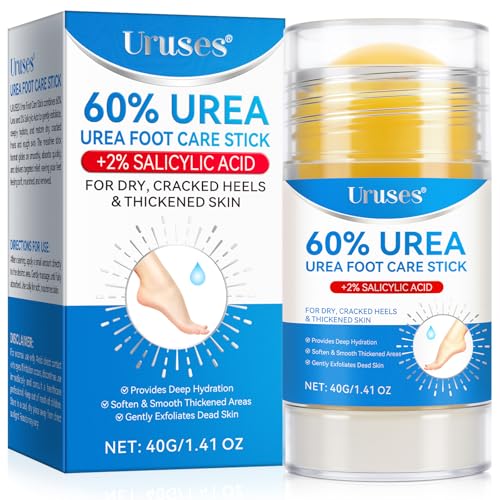
Uruses Urea Cream 60% plus Salicylic Acid 2% Foot Care Stick

OKeeffes Healthy Feet Intensive Healing Balm 2.2oz Stick

CRISTALBOX 5 Pack Moisturizing Foot Mask Socks

CRISTALBOX 5 Pack Hydrating Foot Mask Socks

VREKEF Urea Cream 40 Percent with 2% Salicylic Acid 5.29 oz
Taking A Closer Look At The Options
Stubborn calluses and heels that look almost white with built-up skin need a more aggressive approach than a basic lotion, and that is exactly the lane this stick is built for. Uruses pairs 60% urea, a strong keratolytic that breaks down hardened keratin, with 2% salicylic acid to loosen dead cells at the surface, all wrapped in a hands-free twist-up format. You glide it over clean feet and skip the jar-dipping that transfers bacteria and leaves greasy prints on the bathroom counter.
For people who stand all day, log serious miles in boots, or just put off foot care for months at a time, the dual-action formula addresses the buildup instead of just slicking over the top of it. It doubles as a heel balm for dry hands, knees, and elbows when those spots get rough too, which keeps the bathroom shelf from looking like a pharmacy.
A Strong Showing
- 60% urea plus 2% salicylic acid targets thickened skin rather than just coating it
- Solid stick format means no fingers in a jar, which keeps application more hygienic on shared bathroom shelves
- Works on heels, hands, and knees, so one product covers the rough-skin checklist
- Twist-up design travels well in a gym bag or carry-on for trips and post-flight recovery
- Absorbs quickly enough that socks and sandals do not slide off ten minutes later
Points To Keep In Mind
- High urea levels can sting if skin is already cracked or freshly shaved, so patch testing on a small area first is wise
- Overuse may leave the heel area softer than intended, which can feel oddly slick until the skin rebalances
Whose Shelf It Belongs On
Anyone with thick calluses, rough heels, or skin that laughs at regular lotion will see the most payoff from this stick.
Skip It When
You only deal with mild winter dryness, where the gentler O’Keeffe’s Healthy Feet stick makes more sense for daily upkeep.
When the issue is everyday dryness rather than serious buildup, an occlusive balm that locks in moisture tends to work better than aggressive exfoliants. The O’Keeffe’s Healthy Feet stick is built around jojoba and almond oils, both of which mimic the skin’s own lipids and slip into dry cracks without the burn that high-strength urea can cause. You twist the base and glide the balm directly over heels, sides, and anywhere else that feels tight.
For commuters, runners, and people who wash their hands a hundred times a day, the no-touch stick design removes the greasy lotion bottle from the routine. It slips into a desk drawer, a kitchen junk drawer, or a work bag, and it works equally well as a daytime touch-up or a post-shower layer under cotton socks.
Strong Points
- Jojoba and almond oils condition skin without the sting associated with acid-based formulas
- No-touch stick keeps bathroom surfaces cleaner and reduces product waste on fingertips
- Compact 2.2-ounce size fits easily in a travel kit, gym bag, or work locker
Trade Offs
- It softens existing dryness rather than dissolving thick calluses, so very rough feet may need pairing with a urea-based product
- Sticks can soften in hot cars or steamy bathrooms, so storing it in a cool spot helps it keep its shape
Key Product Details
Who Will Love This
People with mildly to moderately dry feet who want a quick, no-fuss daily balm they can reapply anywhere will appreciate this pick.
Consider Something Else When
You have thick calluses or deep cracks that need real exfoliation, in which case the Uruses stick with 60% urea is a better tool.
Sometimes the easiest foot care is the one you do while doing something else, and that is the appeal of a mask sock. The CRISTALBOX five-pack ships as wearable, sealed socks pre-soaked in a hydrating formula. You slide them on clean feet, kick back for roughly 20 to 30 minutes, peel them off, and massage the leftover serum in. There is no measuring, no jar, and no mess on the bathroom counter.
This format suits anyone who wants the feel of a salon pedicary session at home, especially during dry winter months or after long flights when feet feel puffy and parched. Each pair is individually wrapped, which makes them easy to drop into a self-care gift bag or split into a multi-week treatment plan.
The Good Stuff
- Five individual treatments turn foot care into a small, scheduled ritual rather than a forgotten chore
- Wearable sock design means the serum stays in contact with skin while you read or watch a show
- Single-use packaging keeps each session hygienic and travel-friendly
Honest Caveats
- Mask results are temporary compared with a daily balm routine, so pairing with a stick or cream keeps the softness going
- The sealed sock shape may not fit very wide feet comfortably, so check sizing expectations before settling in
Made For
People who want a relaxing, low-effort treat for tired, dry feet and who appreciate a multi-pack for gifting or a month-long routine.
Look Elsewhere When
You need daily, buildable moisture on a budget, where the O’Keeffe’s stick is a more practical long-term habit.
You will notice this CRISTALBOX five-pack reads almost identical to the previous one, and that is on purpose. It is the same general product under a separate listing, which sometimes shows up at a different unit cost or ships in different packaging. The core idea is identical: slip on a pre-soaked sock, rest, massage in the leftover serum, and toss the sock when finished.
For households with more than one set of feet to pamper, or for anyone who likes to keep a few masks in a drawer for last-minute self-care nights, grabbing the same five-pack from a second listing keeps the routine simple. It also splits neatly into stocking stuffers or care-package add-ons for friends who never buy themselves anything.
Where It Helps
- Multi-pack format makes it easy to keep a few treatments on hand for surprise dry-skin days
- Single-use sachets mean no measuring, no jar contamination, and no sticky bathroom shelf
- Great as a small gift paired with a cozy pair of socks or a bath soak
Some Limits To Know
- Effect wears off after a few days, so this works best alongside a daily moisturizer rather than as a stand-alone fix
- As with any disposable mask, the cost per session adds up if you reach for them weekly
Best Suited To
Shoppers who want a budget-friendly way to share a foot-care moment with a partner, roommate, or family member will find this multi-pack convenient.
Reach For A Different Pick When
You want a single daily product that lives on your nightstand, where the VREKEF 40% urea cream in a 5.29-ounce jar makes more sense.
Where the Uruses stick goes hard with 60% urea for serious calluses, the VREKEF jar takes a slightly gentler middle path: 40% urea paired with 2% salicylic acid, plus glycerin, aloe vera, and sucrose to soften the blow. The 5.29-ounce tub is generous enough to live on the bathroom shelf as a daily workhorse, covering heels in the morning and rough hands after dishes in the evening.
It is a smart match for people who want exfoliation without the intensity of a maximum-strength stick, especially if your heels crack every winter but are not yet at the deep-fissure stage. Because the formula doubles as a hand cream, it pulls double duty for gardeners, weightlifters with callused palms, and anyone whose hands and feet both take a beating.
Points In Its Favor
- 40% urea softens thickened skin while aloe and glycerin keep the experience from feeling harsh
- Large 5.29-ounce tub lasts through a full season of daily use on both feet and hands
- Salicylic acid helps loosen callused edges so a pumice or foot file works more effectively afterward
Practical Considerations
- Jar format means dipping fingers in, so a small spatula or clean hands keep the product from picking up bacteria over time
- The 40% concentration can still tingle on freshly cracked skin, so easing in with every-other-day use helps
Who Should Grab It
Anyone with moderately rough heels, cracked fingertips, or callused palms who wants one cream to cover both jobs will get a lot of mileage from this tub.
A Better Fit Elsewhere
You need a travel-friendly stick you can throw in a gym bag, where the O’Keeffe’s twist-up balm is the more convenient carry.
What Matters Most Before Choosing Foot Moisturizers For Dry Feet
Match The Formula To The Severity
Dryness on the feet ranges from mildly tight to thick and fissured, and the right product tracks that severity. A simple oil-based balm works well for everyday maintenance, while a urea-and-salicylic-acid combination is better when skin has built up into visible calluses. Urea is a humectant and keratolytic in one, which means it pulls water into the skin and softens hardened keratin at the same time, and salicylic acid helps shed the dead layer on top. If your heels are just slightly rough, a lighter balm is friendlier and less likely to sting.
Think About Format And Routine
How a product fits your day matters as much as the ingredient list. A stick travels well, stays clean in a shared bathroom, and is easy to swipe on before socks. A jar is more economical for twice-daily use and is easier to work into a hand-and-foot routine. Mask socks are a treat-style option for occasional deep hydration rather than a daily habit. The format that you will actually use is the one worth picking, because even the strongest cream does nothing sitting in a drawer.
Watch For Practical Trade-Offs
Higher urea percentages can sting on freshly cracked skin, so easing in slowly is sensible. Oils feel soothing but can transfer onto sheets, so wearing cotton socks after a heavy application protects your bedding. Any jar-dipped product benefits from clean hands or a small spatula to keep bacteria out of the formula. None of these are deal-breakers, but they shape how consistently you can use the product.
Consider Where Else You Need It
A foot cream that also works on knees, elbows, and hands stretches your dollar further, especially in households where rough skin shows up in more than one place. If that matches your reality, a multi-purpose urea cream makes more sense than a strictly foot-only formula.
Key Considerations Across These Picks
Pitfalls Shoppers Hit
The most common mistake is treating very thick calluses with a light lotion and expecting a quick fix. Lotions sit on top of built-up skin, so a urea-based formula is usually necessary. Another trap is skipping patch testing with high-percentage urea products, especially on freshly cracked skin where stinging and irritation can derail a routine before it starts. Finally, grabbing a mask sock as a one-time cure and abandoning daily care afterward leads right back to the same dryness a week later.
Where The Extra Money Goes
Higher-strength urea formulas, larger jar sizes, and added soothing ingredients like aloe or glycerin push prices up for good reason. A concentrated urea cream covers more area per application and replaces a separate foot file, hand cream, and callus treatment, which offsets the upfront cost. The upgrade is worth it for people with recurring rough skin, while casual users with mild dryness do just fine with a gentler daily stick.
