

Thin hair and perms have a complicated relationship, mostly because most formulas were built with thicker, coarser textures in mind. The five kits below, from traditional relaxers to gentle rod-based perms, all share one trait: they let you reshape your hair without sacrificing the softness or density you’ve already got. Whether your goal is bounce, wave, or a sleek relaxer, each pick handles delicate strands with a lighter touch than the heavy-duty options out there.
A Side-By-Side Look

Luster’s Shortlooks Color Relaxer 3-n-1 Diamond Black
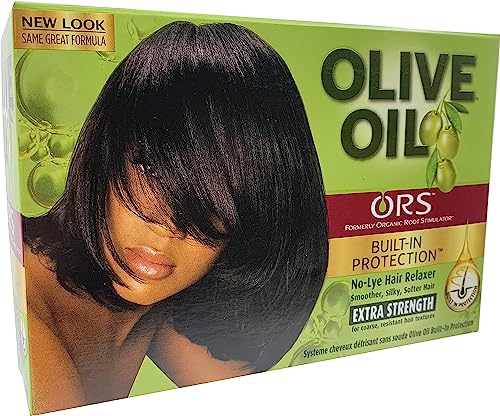
ORS Olive Oil No-Lye Hair Relaxer Extra Strength Kit

Zotos Texture EFX Color Perm, Treated
One ‘n Only Exothermic Hair Perm At Home Kit

WILLBOND 96 Pcs Hair Perm Rods Kit, Yellow
The Details Behind The Selections
The Luster’s Shortlooks formula earns its spot first because it tackles two jobs in a single step: straightening while depositing a rich black tone. For thin hair, that combination is useful when your strands look sparse and faded, since the color boost can make each section appear fuller on contact.
It fits short cuts particularly well, given the “Shortlooks” name, and the Diamond Black shade reads as a true deep black rather than blue-black. Compared with the ORS relaxer in slot two, this one adds color payoff, so the trade-off is real for anyone who doesn’t want extra pigment on their strands.
A Few Strong Suits
- Combined relaxer and color saves a separate dye session, which means less handling of fragile thin hair.
- Formulated for all hair types, so delicate strands aren’t automatically excluded from the strength profile.
- Leaves a noticeable shine and body that helps thin hair read as thicker in low light.
- Compact kit works well for short crops where scalp coverage stays manageable.
Points To Note
- Color deposition is non-negotiable, so the kit is a mismatch for anyone wanting to keep their natural hue or highlights.
- Results on very fine hair can vary, and a strand test is worth the extra few minutes before a full application.
Whose Shelf It Belongs On
Anyone with short, thin hair who also wants a refresh in black color and prefers one streamlined step.
Skip It When
The One ‘n Only Exothermic Hair Perm makes more sense for shoppers wanting bounce and curl rather than straightening and pigment.
The ORS Extra Strength kit is a no-lye relaxer, meaning it skips the harsher sodium hydroxide (a strong alkaline agent found in many traditional relaxers) in favor of calcium hydroxide, which tends to feel gentler during processing. The olive oil component functions as an emollient, a softening ingredient that helps smooth the cuticle, and the source data confirms the brand leans on Mediterranean olive oil for that purpose.
The kit also brings a built-in protection feature, and the Extra Strength variant is intended for coarse, resistant textures. For very fine strands, a shorter processing window is the safer play, but the conditioning base is the real reason it earns a spot here.
Everyday Perks
- Olive oil emollient softens and adds shine, which thin hair can lose quickly after chemical services.
- No-lye formula is generally less irritating to sensitive scalps than traditional hydroxide relaxers.
- Built-in protection layer aims to guard strands during the straightening process.
Trade Offs
- Extra Strength skews toward coarse, resistant hair, so very fine strands may not need the full processing time.
- No-lye relaxers can leave mineral buildup over repeated applications, and clarifying washes between uses are commonly recommended.
Key Product Details
Made For
Shoppers with medium-to-coarse hair who want straightening paired with a softening oil base.
A Better Fit Elsewhere
The Luster’s Shortlooks Color Relaxer is the better match when you also want a black color refresh in the same session.
The Zotos Texture EFX perm is built around color-treated hair, which is a meaningfully different starting point than virgin strands. Thin hair that’s also been dyed or highlighted has already been through one chemical process, and adding a standard perm on top can compound damage quickly.
The “Treated” label is doing real work here, since standard perm formulas can lift or shift tone in color-processed hair. For anyone with subtle highlights, lowlights, or a full dye job who wants to add a soft wave, this kit is the safer fit among perms for thin hair on the list.
What Helps Most
- Designed to work on color-processed hair without stripping or shifting existing tone.
- Creates a softer, more natural wave that suits fine strands without overwhelming them.
- Made in the United States, which can simplify ingredient transparency for some shoppers.
Honest Caveats
- Color-treated formulas typically produce a gentler curl, so anyone wanting tight, bouncy ringlets may find the result underwhelming.
- Thin hair that’s been bleached multiple times may still need a strand test, since damage history varies widely.
Right Fit For
Anyone with previously colored thin hair who wants added texture without committing to a full relaxer.
Look Elsewhere When
The WILLBOND perm rod set makes more sense for shoppers who want to practice DIY rod techniques without chemical commitment.
The One ‘n Only kit earns its spot for a clever bit of chemistry: it’s an exothermic perm, which means it produces a gentle warmth on its own when the components are mixed. That self-heating action helps curls set without needing an external heat lamp, which simplifies a home setup considerably.
The source positions it for normal, tinted, or resistant hair, and the “Fresh Scent” variant is a thoughtful touch for a chemical process. For first-time permers working with thin hair, the absence of extra heating equipment removes one common source of mishaps.
The Case For It
- Self-heating formula supports curl formation without external heat, which reduces handling of fragile thin hair.
- Designed for normal, tinted, or resistant textures, giving flexibility across hair histories.
- Creates firm, lasting curls with body and dimension, which thin hair often lacks in its natural state.
Things To Weigh
- At-home perming still requires careful sectioning and timing, and beginners may find the learning curve steep.
- Stronger curl results can feel too voluminous on very fine hair if the rods chosen are smaller than necessary.
Feature Snapshot
Best Suited To
DIY shoppers with thin hair who want real curl payoff without buying extra heating equipment.
Swap It Out When
The Zotos Texture EFX Color Perm suits shoppers better when color-treated hair is part of the picture.
The WILLBOND rod kit closes out the list with a different approach: no chemical at all, just 96 plastic perm rods at roughly 0.28 inches in diameter, sized for short and long hair alike. For thin hair, that’s a low-commitment way to test how curls hold before committing to any of the chemical kits above.
The package also includes two stainless steel rat tail combs, which makes sectioning cleaner. Rods at this size produce a tighter, more uniform curl pattern, and having nearly a hundred of them means you can set an entire head without running out.
Positive Points
- 96 rods mean plenty of volume for a full head, with extras to share or replace over time.
- 0.28-inch diameter produces consistent, even curls on fine strands.
- Includes two stainless steel rat tail combs for cleaner sectioning during wrapping.
- Zero chemical exposure, which keeps thin hair in its healthiest possible state between services.
Some Limits To Know
- Rod-only results wash out the moment hair gets wet, so the style is more of a dry-day look than a permanent change.
- Wrapping thin hair tightly takes practice, and loose wraps produce weaker curls that fall fast.
- Yellow plastic is functional but offers no grip enhancement, and a bit of styling gel is often needed to keep wraps secure.
Who Will Love This
Anyone new to perming who wants to rehearse rod technique on thin hair before any chemical step.
Another Choice May Suit
The One ‘n Only Exothermic Hair Perm is the better path for shoppers ready to commit to lasting curls at home.
Choosing The Right Perm System For Thin Hair
Thin hair shifts the usual perm math because the cortex (the inner shaft that determines curl memory) is more delicate, and over-processing shows up faster. Strength level matters more than people expect. A “Normal” formula is usually plenty for fine strands, and stepping up to “Extra” or “Resistant” variants often does more harm than good at standard processing times.
Match The Formula To Your Color History
Color-treated hair has already been opened up by dye molecules, so a standard perm wave can lift tone or create uneven curl. Kits designed for treated hair, like the Zotos Texture EFX, work at a lower intensity that respects that history. Virgin hair, by contrast, can take slightly more active formulas without surprise.
Rod Diameter And Curl Scale
Thin hair tends to disappear in overly tight curls, so rod size shapes the final read. Smaller rods near 0.28 inches give a bouncier ringlet look, while larger rods create soft bends that read as volume rather than curl. Picking rods after the perm kit (or alongside one) is a smart move for fine textures.
Decide Between Chemical And No-Chemical First
Rod-only kits cost less, wash out easily, and let you rehearse technique. Chemical perms lock in shape for months but require timing, neutralization (the step that halts the chemical reaction), and strand tests. Thin hair benefits from starting with a rod practice run, then graduating to chemistry once the wrap pattern is comfortable.
Key Considerations Across These Picks
Pitfalls Shoppers Hit
Most mistakes with perms for thin hair come from skipping the strand test, a small hidden section where you trial the formula before committing to the full head. Thin hair processes faster than expected, and what works on a friend with medium strands can leave you with over-curled, fragile results. Another common miss is buying a “strong” formula for hair that doesn’t need it, since the stronger versions exist for resistant textures, not fine ones.
Where The Extra Money Goes
Premium perm kits tend to bundle better conditioning agents, milder activators, and more reliable self-timing. The One ‘n Only kit, for example, builds in its own heat rather than relying on room temperature, which can translate to more consistent curl formation across the head. Paying more generally buys gentler chemistry and more predictable timing, both of which matter more on thin hair than on tougher textures.
Frequently Asked Questions
Are perms safe for thin hair?
Perms can work on thin hair when the formula is matched to fine textures and a strand test is run first. Choosing a gentle or color-treated formula and reducing processing time both lower the risk of damage.
How long does a perm last on thin hair?
Most perms hold for two to four months on thin hair, though the exact window depends on curl size, aftercare, and how often hair gets wet. Rod-only styles last only until the next wash.
Can thin hair hold a perm as well as thick hair?
Thin hair can hold a perm, though the visual effect tends to be softer than on thick strands. Smaller rods and gentler formulas usually produce the most flattering results on fine textures.
What should I avoid doing after a perm on thin hair?
Skip shampooing for the first 48 to 72 hours so the curl fully sets, and hold off on heavy oils or heat styling in that window. Sulfate-heavy shampoos (sulfates are strong cleansing detergents that can strip curl memory) tend to relax the curl faster than gentler cleansers.
Do I need a special shampoo after perming thin hair?
A mild, sulfate-free shampoo and a light conditioner tend to extend the life of a perm on thin hair. Heavy products can weigh fine strands down and flatten the curl pattern faster.
The Takeaway
The best perm for thin hair is the one that respects how quickly fine strands process, fits your color history, and matches the curl scale you actually want to wear. Start with a strand test, lean toward gentler formulas, and treat the rod kit as either a practice tool or a no-commitment style. Your hair will tell you which path fits, and the right system makes the whole process feel less like a gamble.
