

Sensitive skin doesn’t tolerate sloppy technique. Cartridge razors drag across the face, lifting and re-cutting hair, and that mechanical irritation is what causes most of the redness, bumps, and post-shave sting people blame on the blade itself. A properly weighted double edge razor changes the equation. The single blade slices the hair once at skin level, the weight does the pressing, and the angle stays fixed so you stop overcompensating with pressure. That combination is why wet shavers with reactive skin keep circling back to DE razors, even after years of convenience tools.
Below are four picks covering different entry points: a premium-handle razor, a beginner-friendly adjustable-angle model, a heavy all-metal option, and a bulk blade refill that fits any of them. Each one addresses a specific kind of sensitive-skin frustration.
An Overview Of The Picks

LORD Sterling Premium Safety Razor L127

Rockwell Razors R1 Double Edge Safety Razor
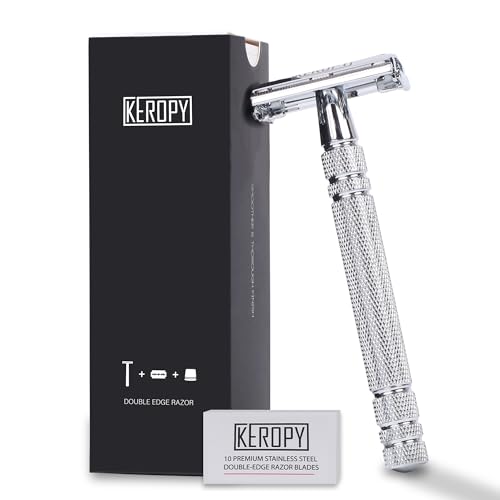
Keropy Double Edge Safety Razor Gloss Silver
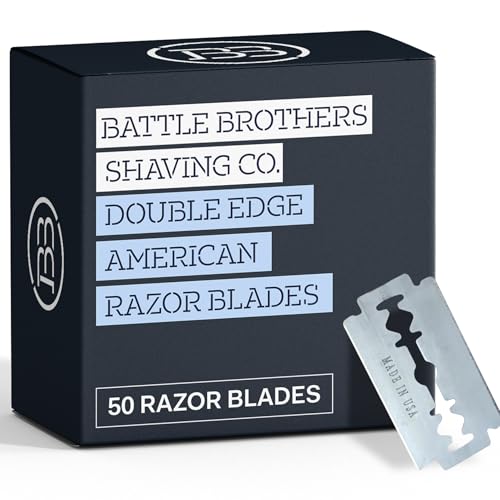
Battle Brothers DE Razor Blades 50-Pack
More On The Choices That Made The List
The LORD Sterling L127 sits in that middle ground where the handle does most of the talking. Its chrome-plated zinc alloy body carries enough heft to let gravity do the work, which matters enormously on reactive skin. You stop pressing because the weight already does the pressing for you, and pressing is where most nicks and razor burn come from on a sensitive face.
It takes any standard double edge blade, so swapping sharpness levels as your skin recovers between shaves is straightforward. The stainless steel blade the razor ships with is a fair starting point, though shavers with truly reactive skin usually rotate to a milder brand after the first few uses. Compared to the bulkier Keropy reviewed below, the L127 feels slimmer in the hand and lands closer to a traditional barbershop profile.
Key Advantages
- Chrome-plated zinc alloy handle resists corrosion in a steamy bathroom, so it holds its finish over years of daily use.
- Balanced weight reduces the urge to apply downward pressure, which directly lowers post-shave irritation on the neck and jawline.
- Accepts all standard DE blades, letting you rotate to milder options when your skin is breaking out or recovering from sun exposure.
- Slim handle profile suits shavers with smaller hands or anyone who prefers a pen-style grip over a chunky knob.
Points To Keep In Mind
- Chrome plating can show water spots in hard-water areas, so a quick towel dry after each shave keeps the finish clean.
- The included blade is a reasonable starter, but owners with very reactive skin commonly swap it for a milder aftermarket blade within the first week.
- Heavier than cartridge handles, so the first few shaves may feel awkward until muscle memory adjusts to the new weight distribution.
Made For
Daily shavers with normal-to-sensitive skin who want a weighted, traditional-feeling handle and a low-fuss entry into the double edge world.
Skip It When
You are entirely new to safety razors and worry about angle guessing, since the Rockwell R1’s fixed-angle head is the more forgiving first step.
The Rockwell R1 is built around a single idea: the angle of a safety razor should not be something you have to learn. The head sits at a fixed geometry that holds the blade at the right pitch no matter how you orient the handle, which is exactly what a beginner with a sore, blotchy jawline needs. Twist the butterfly cap open, drop a fresh blade in, twist it closed, and you are shaving with a tool that forgives sloppy wrists.
It ships with five recyclable DE blades, so the first month of shaves is covered out of the box. The white chrome finish is a step up aesthetically from the basic plated models, and the twist-to-open head is far safer than unscrewing a two-piece handle with wet fingers. Where the LORD Sterling asks you to trust its weight, the R1 asks you to trust its angle, and for reactive skin, angle control is the bigger factor in avoiding irritation.
What Helps Most
- Fixed head geometry removes the steepest part of the safety-razor learning curve, which is where most beginners cut themselves.
- Butterfly twist-to-open design lets you swap blades one-handed, useful in a cramped mirror with slippery fingers.
- Includes five recyclable blades, so the upfront investment covers the first several weeks of shaves without extras.
- White chrome finish hides minor water spotting better than polished chrome, helpful in shared bathrooms that dry between uses.
Honest Caveats
- Fixed angle also means less room to grow, so experienced shavers who want to tune aggression may feel limited later on.
- Lighter than the LORD Sterling or Keropy, so the shave relies more on technique than on the handle’s weight to do the work.
Quick Facts
Whose Shelf It Belongs On
First-time safety razor users with sensitive skin who want a forgiving tool that removes the guesswork from angle control.
Reach For A Different Pick When
You have already nailed the basic angle and want a heavier, more traditional shave, in which case the Keropy delivers more feedback through the handle.
The Keropy trades polish for presence. Where the L127 and R1 aim for a comfortable, balanced feel, this one is a solid chunk of metal that lets you feel every stroke across the grain. The heavy handle is precisely what experienced shavers with reactive skin tend to migrate toward, because the razor glides more than it scrapes, and that glide is what keeps a single pass from turning into three.
You will need steady hands during the first few shaves since the weight can catch you off guard. The gloss silver finish holds up well to daily rinsing, though a soft cloth after each use prevents the limescale ring that any chrome-plated razor eventually collects in hard-water regions. The classic two- or three-piece design means blade changes are a slightly slower unscrew-and-load process than the R1’s butterfly head, which is the main trade-off for that weight advantage.
Features That Help
- Solid metal construction gives the razor noticeable heft, reducing the pressure your hand has to apply on sensitive areas like the neck and upper lip.
- Classic two-piece design is mechanically simple, with fewer moving parts that can wear or loosen after years of daily use.
- Compatible with all standard DE blades, so you can run a rotation of mild and medium aggressiveness as your skin changes through the week.
Trade-Offs To Consider
- Heavier than beginner-oriented razors, so the first shaves can feel overcorrected until you calibrate your pressure.
- Gloss silver finish shows fingerprints and water spots more readily than matte or white chrome alternatives.
- Blade changes require unscrewing the head, which is slower than the Rockwell R1’s butterfly mechanism on rushed mornings.
The Right Fit
Shavers with some wet-shaving experience and persistent sensitivity who want a long-lasting metal tool they can grow into.
Where A Sibling Pick Shines
Brand-new shavers should start with the Rockwell R1 instead, since its fixed angle makes the first month far less eventful.
A safety razor is only as kind to sensitive skin as the blade inside it, and that blade should be replaced often. The Battle Brothers 50-pack covers nearly a year of daily shaves for most users, and the universal fit means these drop into the LORD Sterling, the Rockwell R1, and the Keropy without any adapter or adjustment. Stainless steel construction holds an edge consistently, and the precision-ground cutting edge is what matters on a reactive face: a dull blade pulls hair and irritates follicles, while a sharp one slices cleanly at skin level.
For shavers who have already committed to a handle, this is the refill that keeps the system running. You may find the smoothness depends on your particular beard and prep routine, and it is worth rotating through a few blade brands before settling into a long-term order. Compared to the five blades the R1 ships with, fifty covers the long arc of habit-building without reordering every few weeks.
A Few Strong Suits
- Universal DE fit means one bulk order covers the LORD Sterling, the Rockwell R1, the Keropy, and most other handles on the market.
- Stainless steel construction resists corrosion between shaves, important in a wet environment where cheaper blades can pit or rust.
- Fifty-blade count keeps you in fresh blades for months, and a fresh blade is the single biggest factor in avoiding razor burn on sensitive skin.
- Bulk packaging reduces the per-shave cost considerably compared to sampler packs or five-packs.
Worth Bearing In Mind
- Sharpness and feel vary by skin type, so first-time buyers may want to test a small sampler before committing to fifty.
- Loose blades in a bulk pack can shift during shipping, so a quick inspection on arrival prevents a dulled edge from going into the razor.
Best Suited To
Anyone already committed to a double edge routine who wants a steady, long-term supply of fresh blades without reordering constantly.
Not Your Match When
You have never tried DE shaving before, since starting with the Rockwell R1’s included five-pack is a smarter first move than buying fifty of an untested blade brand.
What To Weigh Before Picking A Sensitive-Skin DE Razor
Razor Weight and Pressure
A heavier handle is generally kinder to sensitive skin because it lets gravity feed the blade through the whisker rather than your fingers. The Keropy and LORD Sterling both lean on weight to reduce pressing, while the lighter Rockwell R1 trades that for angle forgiveness. For most reactive skin, weight matters more once your technique is solid, and angle matters more at the start.
Blade Aggressiveness and Rotation
Every DE razor uses the same standard blade format, so the blade itself is where most of the comfort difference comes from. Mild blades (sharper, less blade exposure) feel gentler, while more aggressive options shave closer but raise the risk of irritation. Sensitive skin benefits from a rotation of two or three blade brands so the skin never adapts to a single sharpness profile.
Head Design and Learning Curve
Closed comb heads (the most common style) sit at a fixed gap and a fixed angle, and the safer option for beginners. Open comb heads expose more of the blade and shave closer, but they take months of practice to handle without nicks. For a first razor on reactive skin, a closed comb like the R1 or L127 is the sensible default.
Long-Term Cost and Refill Logistics
A metal handle is a one-time purchase that can last decades if you rinse and dry it. Blades are the recurring cost, and a 50-pack like the Battle Brothers option brings the per-shave expense down sharply. Comparing the two together matters: a beautiful handle is less useful if the blade rotation is neglected.
Key Considerations Across These Picks
Pitfalls Shoppers Hit
Sensitive-skin shoppers often buy a beautiful handle, then run a single aggressive blade through it for months, and blame the razor for the resulting burn. The handle is only half the system. Skipping a blade sampler is the other common misstep, since blade feel is highly individual and what works for one face can feel like sandpaper on another.
When Paying More Pays Off
Higher-tier handles tend to be all-metal with tighter machining, which translates to a more consistent angle and a longer service life. For a daily shaver replacing cartridges every few weeks, the upgrade pays for itself in under a year. For someone who shaves twice a week, a mid-tier handle is the smarter spend and the premium weight is harder to justify.
Frequently Asked Questions
Are double edge razors actually better for sensitive skin?
Yes, in most cases. A single sharp blade cuts the hair once at skin level instead of dragging multiple blades across the same spot, which reduces the mechanical irritation that causes razor burn and ingrown hairs.
How often should I change a DE blade with sensitive skin?
Every five to seven shaves is a sensible range, though some shavers with reactive skin prefer swapping after three or four. The honest rule is to change the blade the moment you feel any pulling or tugging.
Can women with sensitive skin use these razors?
Yes. The double edge format works on legs, underarms, and bikini areas, though the longer handle of the LORD Sterling or Keropy gives more reach than the stubbier R1 for body shaving.
Do I need shaving cream or soap with a safety razor?
A lubricating lather is essentially required, since dry shaving with a DE blade will irritate even tolerant skin quickly. A quality shave soap or cream builds the slickness that lets the blade glide without scraping.
Will a DE razor close ingrown hairs on the neck?
A DE razor helps prevent new ingrowns because the single pass disturbs the follicle less than multi-blade cartridges, but existing ingrowns need time and gentle exfoliation to clear. Switching blades is part of the cure, not the whole treatment.
Wrap Up
Reactive skin and a quality double edge razor are a better pairing than most people expect. The single blade, the fixed angle, and the steady hand-pressure all work in your favor once the technique clicks. Pick the handle that matches your experience, pair it with a blade rotation you trust, and give the routine a few weeks before judging the results. Your face will tell you the rest.
