

Red-undertone complexions have a quiet challenge: shades that flatter usually lean warm and golden, while the wrong pigment turns sallow fast. Permanent at-home hair color in a brown-to-dark-blonde family tends to land best, with neutral or cool-warm bases that don’t fight the skin’s natural glow. The three formulas below cover different starting points, from dark brunette maintenance to lifting darker bases without brassiness, plus a triple-care cream for anyone with grays to manage. Each one earns its spot for a different reason.
The Essentials At A Glance

Schwarzkopf Keratin Color 3.0 Espresso Permanent Hair Dye
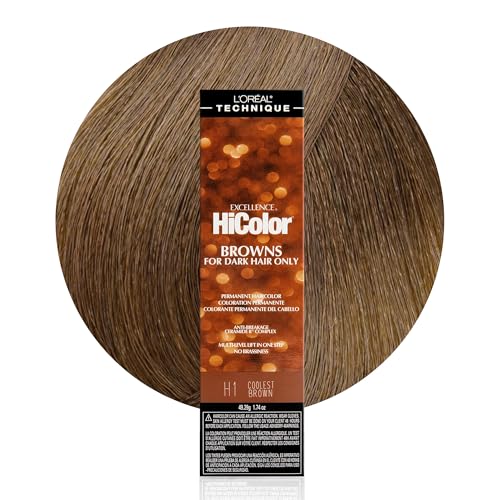
L’Oréal Technique HiColor Browns & Blondes Permanent Hair Color

L’Oréal Paris Excellence Crème 5AR Medium Maple Brown
What Each Pick Brings To The Table
For natural brunettes who want depth without veering flat, the Espresso shade from Schwarzkopf’s Keratin Color line is a steady, predictable choice. The “3.0” on the box marks it as a dark, near-black brown with neutral-warm undertones, which sits nicely against red-toned skin without pulling orange. A bond-enforcing system, meaning a built-in treatment that helps reinforce hair’s internal protein structure during the coloring process, works alongside the keratin infusion to keep strands from feeling stripped after rinsing.
Application follows the standard permanent cream routine: mix, apply from root to tip, then process for roughly 30 minutes depending on the desired depth. Most brunettes with virgin hair (hair that has never been chemically colored) find the timing lands around the middle of the recommended window. The result tends to read as a soft, even espresso with subtle dimension rather than a single flat block of color.
Advantages To Know
- Deep neutral-warm brown that flatters red-undertone skin without going orange
- Bond-enforcing system helps reduce breakage during the coloring process
- Keratin infusion supports softer-feeling hair after rinsing
- Multi-dimensional finish reads natural, not flat or one-note
- Permanent formula covers grays while keeping the brunette tone intact
- Available in single or multi-pack options for ongoing root touch-ups
Points To Note
- Espresso reads very dark, so anyone hoping for a visible lift should look elsewhere
- Owners with previously colored hair sometimes find the result skewed slightly cooler than expected, depending on what’s underneath
Made For
Natural dark brunettes with warm skin who want reliable gray coverage and a rich, low-maintenance shade that doesn’t fight their complexion.
Look Elsewhere When
Anyone aiming to lift from dark brown to a noticeably lighter shade should reach for the L’Oréal Technique HiColor instead, since Espresso is built for staying deep.
Most permanent dyes expect you to start light or pre-bleach (lift the natural pigment with a separate lightening product) before going lighter. HiColor skips that step. It’s formulated to lift dark bases in a single application, which is a real time-saver for anyone tired of a two-night process. The “high-lift” technology (a stronger developer that opens the hair cuticle further to remove existing pigment) is the technical reason behind that one-step promise.
For red-undertone skin, the Browns & Blondes range offers warm-leaning options that complement rather than clash. The creme formula mixes smoothly and stays workable during processing, which helps with even coverage on longer or thicker hair. Brassiness, the unwanted orange or yellow undertone that often shows up when lifting dark hair, is specifically targeted in the formulation, so the result tends to land closer to the swatch on the box.
Real-World Strengths
- One-step lift saves the separate bleaching session most permanent dyes require
- Anti-brassiness formulation keeps the lifted result closer to the intended tone
- Smooth creme consistency spreads evenly through longer or layered hair
- Permanent finish holds through weeks of regular washing
Trade Offs
- Not designed for hair lighter than dark brown, so very light starting points won’t get extra lift
- Single application can leave coarse or resistant hair slightly uneven at the ends, where buildup or previous color tends to sit
- Processing time runs longer than standard permanent dyes, so plan for an extended session
Right Fit For
Dark brunettes aiming to shift a few shades lighter without committing to a separate bleaching step, especially those who want to stay in the warm-brown family.
Reach For A Different Pick When
Anyone with significant grays to cover will get more reliable, even coverage from the L’Oréal Paris Excellence Crème, which is built specifically for stubborn gray blending.
Grays behave differently from natural pigment. They’re more resistant, more prone to showing through warm dyes, and they need a formula built to push past that resistance. The Excellence Crème line from L’Oréal Paris has been a long-standing option for full-coverage gray work, and the 5AR Medium Maple Brown shade lands in a warm maple family that suits red-undertone complexions without going red-red.
The kit is built around a three-step routine: a protective pre-color serum, the coloring cream itself, and a post-color conditioner. Hyaluronic acid (a moisture-binding ingredient typically found in skincare) sits in the mix to help keep hair from feeling parched after the chemical process. The cream texture is thick enough to stay where it’s applied, which helps with the precision that full gray coverage tends to demand.
Standout Benefits
- Reliable full gray coverage, including on stubborn, coarser strands
- Hyaluronic acid in the formula helps hair retain moisture through the coloring process
- Three-step kit includes a pre-color serum that protects the scalp and ends
- Warm maple-brown base complements red-undertone skin without clashing
- Available in single, double, and triple-pack options for ongoing maintenance
Honest Caveats
- Standard permanent processing time runs longer than quick-fix options, so this isn’t an in-and-out product
- Maple Brown can read slightly warmer than expected on hair with previous red or copper dye underneath
Key Advantages
Best Suited To
Anyone managing significant grays alongside warm-toned skin, especially those with coarser resistant strands who need a formula that pushes past that resistance.
Swap It Out When
Colorists aiming to lift several shades lighter from a dark base will get the one-step lift they need from the L’Oréal Technique HiColor instead.
Choosing the Right Shade for Warm, Red-Undertone Skin
The first decision is the starting canvas. Natural dark brunettes with minimal grays tend to get the most predictable result from a deep neutral-warm formula like Espresso, which simply deepens and evens what’s already there. Anyone with a noticeable gray percentage, especially around the temples and part line, benefits more from a coverage-specific formula like the Excellence Crème, where gray resistance is part of the engineering.
The second decision is the direction of the shade shift. Staying in a similar depth reads as low-maintenance and natural. Going lighter requires a lift, and lift from a dark base is where HiColor earns its place, because it skips the separate bleaching step that standard permanent dyes require. Going darker or richer is a one-process job, while going several shades lighter is a longer commitment either way.
The third decision is care during the process. Bond-enforcing or hyaluronic-acid formulas help hair recover faster from the chemical stress of permanent color. For anyone whose hair already runs dry or has been lightened previously, that built-in care matters more than a slight shade difference between two close options. Touch-up frequency matters too, since permanent dyes with warm undertones tend to show fade at the roots faster than cooler formulas, and a kit available in multi-packs keeps that maintenance affordable.
Key Considerations Across These Picks
Where Shoppers Go Wrong
The most common mistake in this category is choosing a shade based on the box photo alone. Swatches are typically shot on a light base, so a “warm brown” can read very differently on dark natural hair or on hair with previous color buildup. Testing a strand first, especially at the ends where old dye tends to linger, prevents surprises. Another slip-up is skipping the included conditioner or post-color treatment, which exists specifically to help hair recover from the chemical process. Skipping it usually shows up two washes later as unexpected dryness.
Where The Extra Money Goes
Premium permanent formulas tend to invest in three places: stronger bond protection during coloring, better anti-brassness technology for lifting shades, and richer post-color treatments with skincare-grade ingredients like hyaluronic acid. The upgrade pays off for anyone with previously processed hair, anyone lifting from a dark base, or anyone covering significant grays. For virgin hair in good condition, a basic formula can do the job just fine.
Frequently Asked Questions
What undertone works best with red-toned skin? Warm and neutral-warm bases tend to harmonize with red-toned complexions, while cool or ashy shades can pull the skin toward sallow. The deeper the natural hair, the more important a slightly warm base becomes.
Can permanent dye really cover stubborn grays? Formulas built for gray coverage, like the Excellence Crème line, are designed to push past gray resistance. Standard fashion shades often let grays peek through after a few washes, so the formula matters as much as the shade.
How long does permanent color usually last? Permanent color typically holds its core shade for four to six weeks before roots become visible, though warm tones may show fade slightly faster than cool ones. The cream’s fade pattern depends on wash frequency, water temperature, and sun exposure.
Is lifting dark hair at home realistic? A high-lift formula like HiColor makes one-step lifting possible on dark natural bases, though results depend heavily on starting depth and previous chemical history. A strand test remains the best way to predict the outcome.
Do included conditioners really make a difference? The post-color conditioner in kits like Excellence Crème is formulated to bring hair’s pH back into balance after the chemical process, which directly affects how the cuticle (hair’s outer protective layer) lies flat. Skipping it usually shows up as a rougher texture in the days after coloring.
