

Glycolic acid pads sit in a weird spot in most routines. They’re the easiest at-home exfoliation tool, but the strength on the label can range from a gentle daily swipe to something that genuinely stings, and the difference matters when your skin barrier is already on edge. Picking the wrong concentration too soon is the most common regret people have with this category.
This list focuses on four pads that cover the real spread of needs, from a strong resurfacing formula for experienced users to a gentler option for daily maintenance. Each one is broken down by what it actually does, where it shines, and the trade-off that comes with the territory.
The Choices Worth Comparing

Nuva Botanicals 20% Glycolic Acid Face Pads (50 Pads)

Elvira 10% Glycolic & 2% Salicylic Acid Pads (60 Pads)

Persbeay Glycolic Acid Exfoliating Toner Pads (70 Count)
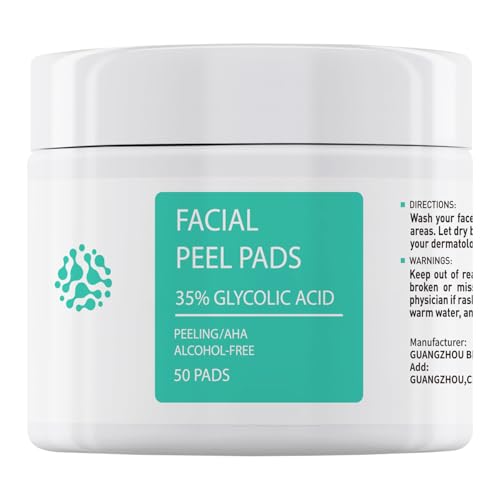
YAFUSIPE 35% Glycolic Acid Toner Pads (50 Pads)
The Strengths Of Each Pick
This is a 20% glycolic acid pad, which puts it firmly in the mid-strength lane. Glycolic acid is an alpha hydroxy acid (AHA) that loosens the bonds holding dead skin cells together, so the swipe actually lifts dullness rather than just spreading liquid around. The vitamin C pairing adds an antioxidant layer that tends to brighten over time, though the exact derivative isn’t spelled out in the listing.
For someone who has used lighter pads before and wants to step up without jumping to the strongest option in this list, the Nuva Botanicals sits in a useful middle ground. Owners looking for visible texture smoothing in a few weeks of consistent use generally find this strength manageable, provided sunscreen is part of the morning routine since AHAs raise sun sensitivity.
Notable Upsides
- 20% concentration lands between daily-gentle and clinical-strength, giving a real exfoliation effect without the highest tier of risk
- Vitamin C addition supports brightness on top of the resurfacing, a useful combo for uneven tone
- Fifty pads covers roughly seven weeks of nightly use, which makes tracking changes realistic
- Jar format keeps pads saturated; less evaporation than loosely wrapped alternatives
Things To Consider
- Not ideal as a first-ever acid product; sensitive skin types may want to start with the Elvira pads before stepping up
- Sun protection the morning after isn’t optional with this strength, and skipping it can undo the gains
Key Specs
Who It Suits Best
People who already use a gentle acid pad and want a real step up in resurfacing power, with vitamin C for an added brightening angle.
Skip It When
You’re new to acids entirely, in which case the lower-strength, dual-acid Elvira pads offer a more forgiving entry point.
Elvira splits the active work between 10% glycolic acid and 2% salicylic acid, two ingredients that target different parts of the pore story. Glycolic is an AHA that works on the surface, while salicylic is a beta hydroxy acid (BHA) that slips into oil and helps clear what sits inside. Putting both on one pad is a “clarity and smoothness” play, and the percentages stay mild enough for a first-timer.
For someone with combination skin, occasional congestion, or just a cautious attitude about acids, the dual approach feels more balanced than going all-in on one route. The 60-pad count also lasts longer than the Nuva jar at a comparable pace, which helps when you want time to actually judge a routine.
Everyday Perks
- 10% glycolic sits in the gentle-strength zone, realistic for users who haven’t used acids regularly
- 2% salicylic acid reaches into pores, helping with blackheads and mid-line congestion that pure AHAs miss
- Sixty pads stretch to roughly two months at once-daily use, plenty of time to see real change
- Two-acid format is forgiving for combination skin, which often reacts to a single heavy acid
Worth Noting
- Results show up slower than with the 20% Nuva pads, since the strength is intentionally dialed back
- Those already comfortable with acids may find this underpowered and want to graduate up sooner
- Pad texture varies in the category, and a softer pad means more liquid dripping during application
Right Fit For
First-time acid users, anyone with combination or congestion-prone skin, and people who want a lower-strength daily option before moving up.
Look Elsewhere When
You’ve used acids for a while and want stronger resurfacing, in which case the Nuva Botanicals pads offer a meaningful step up at 20%.
Persbeay puts the emphasis on steady, daily use rather than a single dramatic peel moment. The 70-pad jar is built for twice-a-day routines, morning and evening, which lines up with how skin cell turnover actually works. The formula pairs glycolic acid with vitamin B3 (niacinamide) and centella, all of which are commonly found in barrier-friendly routines.
Compared with the higher-strength picks, this one trades punch for consistency. The hypoallergenic positioning in the listing matters for sensitive skin types, and the larger pad count means a lower per-use cost if you stick with it. The trade-off, as always, is that patience is part of the deal since this is paced for gradual texture refinement.
Positive Points
- 70 pads is the highest count in this list, useful for twice-daily routines without burning through a jar
- Vitamin B3 (niacinamide) helps with the redness and tone piece that pure acids can overlook
- Hypoallergenic positioning makes it a reasonable starting point for sensitive skin types
- Centella addition supports barrier comfort, useful when acids might otherwise feel drying
Trade Offs
- Gradual results mean a 4-week window before any real judgment on texture change
- Twice-daily acid use is more than some skin types tolerate, even at lower concentrations
- Pad saturation can drop toward the bottom of the jar, a common issue with deep-count formats
Best Suited To
People committed to a long daily routine who want a high pad count and a gentle ingredient list over fast visible change.
Consider Something Else When
You want stronger resurfacing in a shorter window, in which case the YAFUSIPE 35% pads push much harder per swipe.
YAFUSIPE is the strongest pad on this list at 35% glycolic acid, which is a serious concentration, and the listing frames it as a chemical peel in pad form. A 35% AHA is closer to a professional resurfacing level than a daily swipe, and the marketing language around wrinkles, blemishes, and uneven tone points at users who already know what strong acids do to their face.
For someone who has cycled through lighter pads and wants more visible change per session, this is the obvious step up from the Nuva Botanicals and Elvira options. The honest read is that this is a “use carefully, not often” pick. Most routines won’t tolerate it nightly, and a once-weekly cadence with diligent sunscreen the morning after is the realistic path.
What Stands Out
- 35% concentration is the highest in this list and approaches professional-level resurfacing
- Positioned for both texture concerns and post-blemish marks, useful for uneven tone
- Fifty pads at this strength stretches further since most users won’t apply it daily
- Single-swipe resurfacing can save time for users who want a stronger effect in fewer sessions
Honest Caveats
- 35% acid is too aggressive as a first peel; sensitive or first-time users should build tolerance with the Elvira pads first
- Daily SPF the morning after becomes non-negotiable, and skipping it risks visible irritation
- Higher-strength acids can sting on application, a normal sensation but one that catches new users off guard
- Overuse is a real risk since “if a little works, a lot works better” doesn’t apply to chemical exfoliation
Key Specs
Whose Shelf It Belongs On
Experienced acid users building a resurfacing routine who want a strong weekly treatment and understand the sun-sensitivity trade-off.
Another Choice May Suit
You’re still figuring out how your skin responds to AHAs, in which case the Persbeay daily pads give you room to learn without overdoing it.
What To Weigh Before Choosing Glycolic Peel Pads
Acid strength sets the tone for the entire experience. A 10% pad behaves like a daily polish, while a 35% pad behaves more like a monthly reset, and choosing between them should hinge on how your skin has reacted to acids before, if at all. First-time users generally do better starting lower, even if the higher percentages look more efficient on paper.
Pad format and count matter more than people expect. A 70-pad jar is built for twice-daily consistency, while a 50-pad jar at 35% strength is built for once-a-week use. Mismatching your routine style to the count leads to either a jar that empties too fast or pads that dry out before you finish them. Storage matters too, since acid formulas degrade faster when the lid isn’t sealed tight.
Sunscreen is the silent partner in any acid routine. AHAs lift away the top layer of skin that would otherwise absorb some UV, so the morning after using any of these pads calls for proper sun protection. Skipping that step is the most common reason people blame the pad for a reaction the sun actually caused.
Ingredient pairings change what a pad actually does. Vitamin C leans into brightness, niacinamide leans into tone and barrier comfort, salicylic acid leans into pore-clearing, and centella leans into soothing. There’s no “right” pairing, but knowing what the supporting cast does helps match the pad to the concern you actually want to address.
What To Know Before You Buy
Common Slip Ups With Acid Pads
The single biggest mistake is starting at the highest concentration because the marketing sounds impressive. Stronger acids don’t speed up the timeline for everyone; they just raise the cost of getting it wrong. Build tolerance at 10% first, then reassess.
Layering acids from different products is the other usual trap. A glycolic pad plus a salicylic cleanser plus a retinol serum is a real recipe for a damaged barrier, and the symptoms (peeling, redness, stinging) often get blamed on the pad. Less is genuinely more in this category, especially in the first month.
When Spending Up Actually Helps
A higher-tier pad earns its place when the supporting ingredients are well chosen and the concentration makes sense for your skin. The 35% YAFUSIPE is a fair example: it’s not “better” than the others, it’s different, and the difference only makes sense for users who already know what stronger acids do. Paying more for a daily-use pad with thoughtful pairings like niacinamide and centella is also defensible if your barrier tends to react.
Frequently Asked Questions
How often should I use glycolic peel pads? Most people tolerate a 10% pad daily and a 20% pad every other day, while a 35% formula is generally used once a week at most. Start slower than the jar suggests and only increase frequency if your skin shows no irritation after two weeks.
Can I use glycolic pads with retinol? Combining them in the same routine increases the risk of dryness and peeling, and alternating nights is the safer pattern. Sensitive skin types may need to keep them on completely separate days rather than alternating.
Do glycolic pads help with acne scars? Surface-level post-blemish marks often fade with consistent acid use over several weeks, but deeper indented scars need professional treatments. The Persbeay and YAFUSIPE pads are both positioned for this kind of mark work.
Should I rinse off the pad after using it? Most leave-on formulas are designed to stay on the skin, so rinsing removes the active ingredients before they finish working. Check the jar instructions since a small number of strong peels are meant to be rinsed after a set time.
What should I avoid using on the same day? Other strong actives like vitamin A derivatives, benzoyl peroxide, and physical scrubs all stack the irritation risk. A simple moisturizer and sunscreen is a sensible rest-day routine alongside any acid pad.
Final Verdict
The right pick comes down to where your skin sits on the experience curve, not which jar has the loudest marketing. New users get more value from a 10% daily option like Elvira, steady routine-builders do well with the Persbeay jar, and experienced users chasing real resurfacing will find the YAFUSIPE 35% pad worth the caution. Whichever strength you choose, consistent sunscreen and a willingness to go slow matter more than the percentage on the label.
