

Coloring naturally dark hair without bleach often feels like a chemistry puzzle. Lift is limited, warm undertones creep in, and many home dyes either barely show up or dry the strand out. The picks below focus on permanent formulas that layer rich black pigment, sidestep harsh ammonia, and make the at-home process feel manageable for a first-timer.
The Leading Options At A Glance
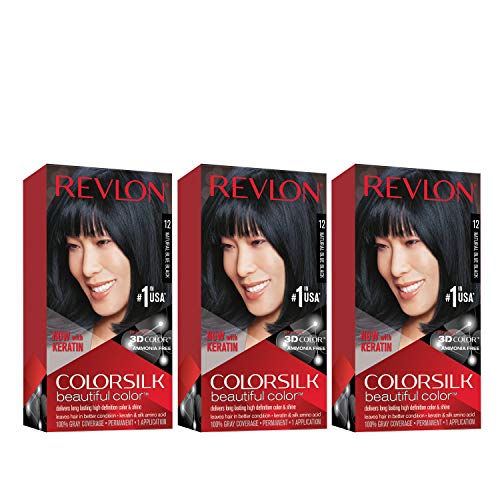
Revlon ColorSilk Permanent Hair Color 12 Natural Blue Black (Pack of 3)
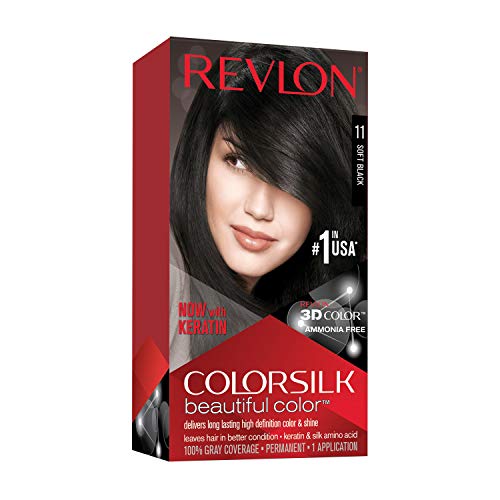
Revlon ColorSilk Permanent Hair Color 11 Soft Black (Pack of 1)

Clairol Nice’n Easy Root Touch-Up 2 Black (Pack of 2)
More Details On Our Top Picks
Color-treated hair that has lost its midnight edge often looks flat a few weeks in, and that’s where a blue-black formula earns its keep. The 12 Natural Blue Black shade from Revlon’s ColorSilk line is built around cool undertones, so the result reads as deep, almost ink-like, rather than a soft brown. Because it comes in a three-pack, the second and third tubes can stay on the shelf for the inevitable touch-up, which matters for anyone maintaining a uniform black across several months.
Unlike the Soft Black option below, this shade leans cool, so people with warmer skin tones may find it slightly less forgiving in certain lights. The formula skips ammonia, which is a real plus for dark hair that gets chemically layered over time.
The Upside
- Cool blue-black pigment holds depth without lifting natural color, so it works on virgin black hair without bleach.
- Keratin and silk amino acid additions aim to keep the strand smoother after rinsing, a small win for anyone with heat-styled hair.
- Three-pack format means a backup tube is always within reach when the first application runs thin or a future root touch-up is needed.
- The ammonia-free base keeps the scent more bearable in a small bathroom, especially for anyone sensitive to strong chemical odors.
Things To Consider
- Cool tones can read almost gray on some skin undertones, so a strand test on a hidden section is worth the extra ten minutes.
- Three tubes can feel like overbuying for someone who only plans a single application, though unopened boxes typically stay usable for quite a while.
Who It Suits Best
Anyone maintaining cool-toned black across several months and wanting spare tubes ready for scheduled root work.
Skip It When
Someone warming up their overall look should reach for the Revlon ColorSilk 11 Soft Black instead, which reads warmer and gentler.
First-time at-home colorists often want the safest possible entry point, and a single-tube Soft Black kit answers that need without the bulk. The 11 Soft Black shade is the warmer sibling to the Blue Black option above. It deposits pigment gently, which keeps the result looking like natural hair that just happens to be a richer black, rather than a dyed helmet.
One box covers a standard head of medium-length hair, with a little left over for a quick root refresher. Compare that to the three-pack of Blue Black, and this is clearly the low-commitment version for people unsure how often they’ll actually color.
Practical Advantages
- Single-kit format is approachable for first-timers who only need one application to start.
- Soft Black’s warmer undertone tends to look more natural across a wider range of skin tones than cooler blue-black options.
- The included instructions walk through a straightforward root-to-tip process that doesn’t require any extra tools beyond a comb and clip.
- Ammonia-free with keratin and amino acid additives, which helps the strand feel less parched after the final rinse.
Honest Caveats
- Warming undertones can drift slightly brassy on hair that has been previously lightened, so a strand test is wise before committing.
- Heavy gray coverage on resistant strands sometimes needs a second pass, depending on texture and how porous the hair is.
Key Specs
Right Fit For
First-timers who want a low-risk single kit and a softer black that flatters most skin tones.
Look Elsewhere When
The Clairol Nice’n Easy Root Touch-Up 2 Black is a smarter grab for anyone who only needs to blend regrowth rather than cover the full head.
Not every dark-haired shopper needs a full-head dye. Sometimes the issue is a two-inch band of regrowth at the part line, and that’s precisely what a root touch-up kit is designed for. The Clairol Nice’n Easy Root Touch-Up in 2 Black uses a brush applicator that paints color directly onto new growth, skipping the mess of mixing bowls when only the roots need attention.
It’s not a substitute for either of the Revlon ColorSilk kits above, since those are full-head formulas. Where it shines is the between-session maintenance window, the three-week stretch when the salon color starts showing its age.
Strong Points
- Brush-style applicator lays pigment exactly where the regrowth is, reducing wasted product on already-colored lengths.
- Designed to blend with common salon and home black shades, so it slots into an existing routine without a visible seam.
- Two-pack value means one box handles the immediate touch-up while the second waits for the next round of regrowth.
- Targeted format keeps the overall process faster and less intimidating than a full kit for a quick weekend refresh.
Trade Offs
- Brush applicator only covers roots, so it isn’t a real option for anyone hoping to refresh all-over color or shift tone.
- Matching depends on the existing shade, and people with very cool or very warm blacks may need a careful comparison before committing.
Best Suited To
People who color their full head every few weeks and want a fast way to handle visible regrowth in between.
Consider Something Else When
The Revlon ColorSilk 11 Soft Black makes more sense for a full-head color change, since it covers the entire strand rather than just new growth.
What To Weigh Before Picking a Black Hair Color
Shade Families Matter More Than Names
The words “soft black,” “natural black,” and “blue black” sound interchangeable, but the undertone shifts the final result noticeably. Cool blue blacks can pull almost charcoal in certain lights, while warmer soft blacks lean espresso. The right call depends on the surrounding skin tone, the existing highlights, and the wardrobe palette. Picking the wrong undertone is the most common reason home color looks off in photos.
Ammonia-Free Formulas Change the Routine
Ammonia is what opens the hair cuticle, which is the outer protective layer of the strand, so color can slip inside. Skip it, and the cuticle opens through other means, which usually means gentler ingredients but slightly slower processing. That trade-off matters for anyone with a sensitive scalp, chemical-treated hair, or a low tolerance for chemical fumes in a small space.
Coverage Strength Against Gray
Permanent formulas claim full gray coverage, but resistant grays sometimes need a longer processing time or a second pass. Thicker, coarser strands usually need more development time than fine hair. The honest read is that even the best at-home black color can leave a few stubborn grays peeking through, so a strand test is worth the extra effort.
Full-Head vs. Root-Only Kits
A full-head kit costs more and takes longer but refreshes everything. A root touch-up kit is faster, cheaper per session, and laser-focused on regrowth. Choosing between the two comes down to how often full color is needed and how visible the roots get between sessions.
Pitfalls Shoppers Hit and Where the Extra Money Goes
Mistakes Worth Dodging
Skipping the strand test is the single biggest reason home color disappoints. A small swatch on a hidden section, behind the ear or at the nape, predicts how the formula will sit on the rest of the head. Buying a single box for shoulder-length or longer hair is another common slip, since most kits are designed for medium-length hair, and running out halfway through leaves an uneven finish. Color also processes differently on previously dyed hair than on virgin hair, so treating the two the same way produces patchy results.
The Case For Spending Up
The jump from a basic drugstore box to a multi-pack or a keratin-enriched formula usually buys better conditioning, more pigment per tube, and a more comfortable application experience. For people coloring every four to six weeks, those extras add up to less dryness and a longer window before the color looks tired. Higher-tier kits also tend to include better applicator tools, which makes the at-home process feel less like guesswork and more like a controlled routine.
Frequently Asked Questions
Can black hair really show color without bleach?
Permanent black formulas deposit pigment directly on top of natural black, deepening and refreshing the shade without lightening. The result is richer, more even color, not a dramatic transformation, so the change is subtle but real.
How long does at-home black color usually last?
Most permanent formulas hold their depth for four to six weeks before visible fade, with the roots showing first. Color-care shampoos and cooler rinse water tend to stretch that window a little longer.
Will these formulas cover gray completely?
The featured kits are designed for full gray coverage, and they generally perform well on standard grays. Resistant coarse grays sometimes need a second application or a longer processing time.
Are ammonia-free dyes safer for sensitive scalps?
They tend to be gentler on the scalp and produce less odor during processing, which helps anyone reactive to strong chemical smells. That said, individual sensitivities vary, so a patch test is still wise.
How often is it safe to recolor black hair?
Most stylists recommend waiting four to six weeks between full applications to let the strand recover. Root touch-ups can happen more frequently since they only cover new growth rather than overlapping previously colored hair.
