

Thinning hair rarely announces itself politely. It shows up in a wider part line, a thinner ponytail, extra strands in the shower drain. The right scalp oil won’t rewrite genetics, but a consistent routine can support a healthier scalp environment, which is where fuller-looking hair actually starts. This shortlist covers eight options built around rosemary, batana, biotin, and peptide formulas, so you can match one to your hair type, your patience level, and how much mess you’re willing to tolerate on your pillowcase.
The Shortlist At A Glance

Psalmonica Rosemary Batana Castor Oil Hair Growth Serum (50 ML)

OUAI Scalp Serum – Balancing Hair Serum (2 Fl Oz)

Lebanta Batana Oil For Hair – Pure Raw Blend With Castor & Rosemary (4 Fl Oz)

Handcraft Blends Batana & Rosemary Hair Oil (2 Fl Oz)

Zenolio Labs Batana Oil for Hair Growth – Unrefined Raw Botana Oil
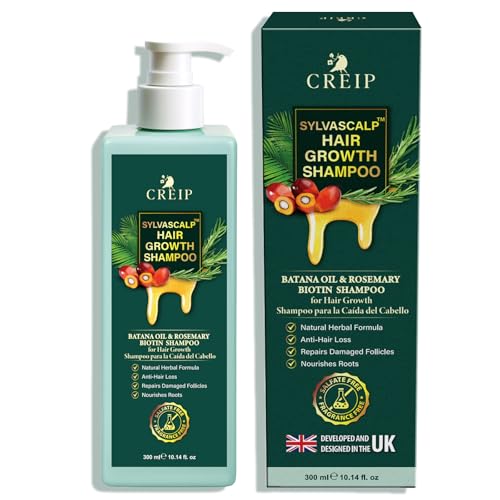
Creip Rosemary & Batana Oil Hair Growth Shampoo

Cliganic Rosemary Oil for Hair & Scalp – Biotin & Jojoba Repair Serum (2 Fl Oz)

THORN & BERRY Hair Growth Serum for Thinning Hair
More Details On Our Top Picks
This little 50 ml bottle packs five of the most talked-about ingredients in the category into one formula: rosemary oil, batana oil, castor oil, rice water, and biotin. Rosemary has become the ingredient everyone asks about first, and castor oil brings thickness to the party, so the blend covers both the trendy and the traditional bases.
The plant-based base is positioned as gentle on the scalp, which matters when you’re applying something several times a week. For anyone building a first serious routine against shedding, this is an easy starting point because you don’t have to layer separate products.
Strong Points
- Combines rosemary, batana, castor, rice water, and biotin in one step, saving shelf space and money
- Plant-based formula designed to be kind to the scalp during frequent use
- Marketed for both men and women, so shared bathrooms only need one bottle
- Compact 50 ml size travels well in a gym bag or carry-on
Things To Consider
- Multi-oil blends can feel heavier on fine hair, so nighttime application works better than pre-styling
- You may need a dedicated applicator or fingertips to keep the oil off your roots’ surface rather than soaking lengths
Key Specs
Who It Suits Best
First-timers who want a single, all-in-one botanical serum instead of juggling three separate bottles.
A Better Fit Elsewhere
Shoppers with very oily scalps will likely prefer the OUAI Scalp Serum, whose water-light texture won’t weigh down fine roots.
Where the Psalmonica serum leans botanical and rich, OUAI approaches the problem like skincare. Hyaluronic acid, the same humectant found in face serums, sits at the center of this formula alongside nourishing adaptogens, and the whole thing is built to hydrate the scalp barrier rather than coat the strands.
That design choice pays off for anyone whose scalp gets greasy by day two. You can apply it to damp or dry roots without the heavy residue traditional oils leave behind, and it’s formulated for all hair types. The trade-off is that you’re trading some of the thick, coating richness of castor-based blends for comfort and wearability.
What We Like
- Hyaluronic acid hydrates the scalp barrier, addressing dryness that can accompany thinning
- Lightweight finish suits fine or oily-prone hair that heavy oils flatten
- Designed to reduce scalp discomfort, a real plus for tight, itchy feeling scalps
- Two-ounce bottle supports a consistent daily habit
Worth Noting
- No castor or batana oils here, so fans of those thicker textures may find the feel too subtle
- Consistency matters more than usual since hydration benefits build gradually over weeks of use
Made For
People with fine, straight, or quickly-greasy hair who want scalp care that disappears into their routine.
Swap It Out When
Very dry, coarse, or textured hair usually gets more from the Handcraft Blends seven-oil formula reviewed below.
Batana oil, pressed from the nuts of a Central American palm, has moved from folk remedy to mainstream ingredient, and Lebanta leans into that heritage with a raw, additive-free blend. Alongside the batana you get organic castor, pumpkin seed, coconut, and rosemary oils, a lineup aimed at dryness and dullness as much as density.
The headline here is volume. Four fluid ounces is double what most competitors in this list offer, which changes the math for pre-wash treatments where you saturate the whole scalp. Weekly deep-oiling sessions burn through small bottles fast; this one keeps going.
Highlights
- Four-ounce bottle doubles typical capacity, ideal for generous pre-wash applications
- Pumpkin seed oil adds a classic scalp-supporting ingredient many blends skip
- Ethically sourced, chemical-free positioning appeals to clean-routine shoppers
- Coconut oil component helps soften dry, dull lengths while you treat the scalp
Minor Gripes
- Raw oil blends commonly arrive semi-solid in cool weather; warming the bottle in your hands restores flow
- The coconut content can clog pores on acne-prone skin along the hairline, so patch-test near the temples
At A Glance
Right Fit For
Routine-driven users doing weekly scalp massages who want maximum bottle life per dollar spent.
Not Your Match When
Minimalists who prefer a single unblended oil will get more satisfaction from the Zenolio Labs bottle coming up next.
Compared to Lebanta’s five-oil mix, Handcraft Blends goes deeper with seven components: jojoba, castor, sunflower, batana, rosemary, peppermint, and biotin. Peppermint is the interesting addition here, bringing a cooling sensation that turns application into something closer to a scalp treatment experience.
The brand specifies its batana comes from Elaeis oleifera nuts and stays unrefined, which preserves more of the oil’s natural character. Jojoba deserves a mention too; it closely resembles the skin’s own sebum, so it absorbs readily without the grease slick lighter-haired users dread. Split ends and dry scalp are explicitly in this formula’s job description, making it a two-front product.
Upsides
- Seven-ingredient blend addresses scalp, roots, and damaged ends simultaneously
- Unrefined batana retains its natural nutrient profile
- Jojoba base absorbs faster than heavier coconut-heavy rivals
- Peppermint delivers a refreshing tingle that makes the ritual pleasant
- Biotin inclusion targets strand strength from the outside in
Softer Spots
- The peppermint tingle is energizing for some and irritating for sensitive scalps, so start with a small dose
- Two ounces runs out quicker than the Lebanta bottle if you oil generously
Whose Shelf It Belongs On
Anyone battling both thinning and dryness, especially those with wavy or coarser textures that drink up richer oils.
Reach For A Different Pick When
Sensitive-skin users prone to tingling reactions should look at the Cliganic serum later in this list, which is dermatologically tested.
Every other bottle on this list is a blend. This one isn’t. Zenolio Labs sells straight, unrefined batana oil, nothing layered on top, which makes it the pick for people who want to control every variable in their routine or mix their own custom dilutions at home.
The pitch centers on deep scalp hydration and restoring softness and shine to dry or damaged hair, with the traditional reputation of batana doing the heavy lifting. One honest caveat: pure batana has a distinctive smoky, earthy scent that some owners love and others tolerate. Blended products like the Handcraft Blends oil mask it better.
Bright Spots
- Single-ingredient purity means no fillers, fragrances, or surprise additives
- Works as a base for DIY scalp-oil mixes if you enjoy customizing ratios
- Deeply moisturizing profile helps restore shine to heat-damaged lengths
Small Caveats
- The natural smoky aroma divides opinion; expect an earthy scent rather than salon fragrance
- Raw oil texture firms up in cooler rooms, so gentle hand-warming before use keeps application smooth
Quick Facts
Who Should Grab It
Ingredient minimalists and DIY formulators who read labels first and want one honest oil.
Consider Something Else When
Anyone wanting a ready-made multi-active blend will find the Psalmonica serum more convenient out of the box.
Not everyone wants oil sitting on their scalp between washes, and that’s exactly the gap this shampoo fills. Creip folds rosemary, batana oil, biotin, and Panax ginseng into a sulfate-free wash, so the active ingredients reach your scalp every time you shower without any leave-in residue.
Sulfate-free matters more than it sounds. Sulfates are the harsh detergents that strip natural oils, and on a scalp already struggling, gentler cleansing preserves what moisture remains. The fragrance-free formulation is another quiet win for reactive skin. Realistically, a rinse-off product delivers less contact time than a leave-in serum, so think of this as a supporting player rather than a standalone fix.
Reasons To Buy
- Delivers rosemary, batana, biotin, and ginseng during a routine you already do daily
- Sulfate-free cleansing protects the scalp’s natural moisture barrier
- Fragrance-free formula suits scent-sensitive users and shared households
- Zero greasy residue, so fine hair keeps its volume after washing
Points To Note
- Rinse-off contact time limits how much the actives can absorb compared to leave-in oils
- Pairing with a dedicated serum gives noticeably better coverage for stubborn thinning zones
Details At A Glance
Best Suited To
Low-effort routines and gym-goers who wash frequently and refuse to add another leave-in step.
Another Choice May Suit
People targeting specific sparse patches will see more focused results from the THORN & BERRY peptide serum, which applies directly where needed.
Cliganic built its name on clean labeling, and this serum carries that DNA: vegan, cruelty-free, non-GMO, paraben-free, sulfate-free, and dermatologically tested. For anyone whose scalp reacts to everything, that last credential carries real weight in a category where irritation claims are common and verification is rare.
The formula itself blends rosemary with argan, castor, peppermint, sweet almond, coconut, and jojoba oils, then infuses biotin. Unlike the Handcraft Blends version, the emphasis tilts toward smoothing frizz and repairing damage alongside scalp work, so it pulls double duty on mid-lengths. Sensitive skin gets explicit callout status here, which few competitors bother claiming.
Plus Points
- Dermatologically tested and safe-for-sensitive-skin positioning removes guesswork for reactive scalps
- Vegan and cruelty-free credentials suit ethical-routine shoppers
- Seven botanical oils smooth frizz while treating the scalp, replacing a separate hair serum
- Biotin infusion supports the appearance of fuller strands over time
Honest Caveats
- With this many oils, a little goes a long way; over-application is the most common complaint pattern with multi-oil serums
- Those wanting batana specifically won’t find it in this blend
The Right Fit
Sensitive-skinned users and clean-beauty loyalists who want third-party-minded transparency on every claim.
Where A Sibling Pick Shines
Scalps that tolerate stronger actives and want batana’s traditional reputation are better served by the Lebanta blend earlier in this list.
This is the science-leaning entry on the list. Instead of leading with traditional oils, THORN & BERRY builds its serum around copper tripeptide-1 and acetyl tetrapeptide-3, two peptides studied for their role in scalp revitalization, paired with niacinamide and caffeine. Peptides are short amino-acid chains that signal skin cells; niacinamide is the vitamin B3 derivative familiar from skincare shelves.
The texture is the selling point: lightweight, non-greasy, fast-absorbing, and approved for daily use on all hair types. Because precision matters with edges and eyebrows, a targeted serum like this beats pouring castor oil anywhere near your brows. Fine-haired users get density support without flattening their style.
Standout Traits
- Peptide and niacinamide complex takes a research-forward approach to scalp density
- Non-greasy absorption means morning application won’t ruin styled hair
- Labeled suitable for edges and eyebrows, rare versatility in this category
- Caffeine addition gives follicles a daily wake-up alongside the peptides
Room For Improvement
- Skips the traditional oils entirely, so very dry hair still needs a separate conditioning oil
- Daily commitment is expected; sporadic use likely won’t move the needle on density
Core Details
Perfect Match For
Fine-haired professionals and detail-oriented users targeting edges, part lines, or brow gaps with precision.
Look Elsewhere When
Dry, coarse hair needing real moisture should pair this concern with the richer Handcraft Blends oil instead.
What Matters Most Before Choosing Hair Oils For Thinning Hair
Match The Texture To Your Hair Type
Heavy oils like castor and batana suit coarse, curly, or chemically treated hair that craves moisture. Fine or oily hair does better with lightweight serums such as hyaluronic or peptide formulas, which treat the scalp without weighing roots down. Choosing against your hair type is the fastest route to abandoning a routine.
Read The Active List, Not The Marketing
Rosemary, batana, pumpkin seed, peptides, and caffeine each play different roles, from circulation support to hydration to density signaling. A longer ingredient list isn’t automatically better; what counts is whether the actives match your specific concern, whether that’s dryness, breakage, or visible sparseness at the part line.
Commit To Consistency Before Judging Results
Scalp products generally need eight to twelve weeks of regular use before any visible difference shows up. A nightly two-minute massage with an applicator nozzle beats an occasional generous slathering. Build the habit into something you already do, like brushing before bed, and adherence takes care of itself.
Patch Test And Manage Expectations
Apply a small amount behind the ear for two days before full use, especially with peppermint or essential-oil-heavy blends. And keep perspective: these products support the appearance of healthier, fuller hair. Persistent or sudden loss deserves a conversation with a dermatologist, not just a bottle.
Key Considerations Across These Picks
Traps First Timers Fall Into
The biggest mistake is buying a rich oil for fine hair, hating the grease, and quitting within a week. The second is expecting results in two weeks and switching products constantly, which resets progress every time. Pick one formula matched to your hair type and give it a full season.
What Separates Premium From Basic
Higher-priced serums typically spend more on actives: peptides, hyaluronic acid, dermatological testing, and refined delivery systems. Budget blends lean on larger volumes and traditional oils. Paying up makes sense for sensitive scalps or precision targets; paying less makes sense for generous weekly pre-wash treatments.
Frequently Asked Questions
How long before I see results from a hair oil?
Most formulas need eight to twelve weeks of consistent use before visible changes appear. Hair grows slowly, so patience and daily consistency matter more than product choice.
Can I use these oils on color-treated hair?
Yes, all the picks here are compatible with colored hair, and several are sulfate-free by design. Always patch test first, since chemically processed scalps can be more reactive.
Should oil go on wet or dry hair?
Both work, though damp hair absorbs lightweight serums more evenly. Heavier pre-wash oils perform best on dry hair before shampooing.
Can men and women use the same product?
Absolutely. Every item on this list is formulated for both, since the underlying scalp biology is similar. Choose based on hair texture and sensitivity instead.
Do these replace medical treatments for hair loss?
No. These are cosmetic products that support the look and feel of fuller hair. Significant or sudden shedding warrants a dermatologist visit first.
Closing Thoughts
There’s no single right answer here, just the right match for your hair, your scalp, and your willingness to stick with a routine. Start with texture: light serums for fine hair, richer blends for dry or coarse strands. Give whichever bottle you choose a fair twelve weeks, apply it consistently, and let the mirror, not the marketing, make the final call.
