

Living with skin allergies turns an ordinary chore into a guessing game. Fragrance, dye, and harsh surfactant residue left in fabric can keep the irritation cycle going long after the rinse cycle ends. The right detergent changes that pattern, stripping away allergens while leaving nothing behind to react to. This list focuses on formulas built around sensitive skin, with a few specialized options for households dealing with dust mites, pet dander, or pollen.
An Overview Of The Picks

ECOS Laundry Detergent Liquid, 100 Loads, Free & Clear

ARM & HAMMER Deep Clean Free & Clear Power Paks, 32 Count
Allersearch AllergenWash 24 Oz Laundry Detergent

Purex Natural Elements Liquid Laundry Detergent, 82.5 oz, 165 Loads
Seventh Generation Free & Clear Liquid Detergent, 30 Loads
Inside Each Recommended Option
ECOS has built a quiet reputation among households navigating eczema, contact dermatitis, and general fragrance sensitivity. This 100-load jug is the workhorse option, dermatologist tested and pH balanced (a measure of how acidic or alkaline a formula sits on the skin’s natural acid mantle) so it tends to rinse clean without leaving the residue that triggers post-wash itching.
Unlike the pod-style ARM & HAMMER pick that follows, this is a true liquid you measure, which gives you dosing control on smaller loads of baby clothes or delicates. For families washing bedding and underwear multiple times a week, the volume here is generous without demanding a premium price point.
Bright Spots
- Dermatologist tested formula reduces the guessing game for reactive skin
- Plant-powered surfactants (the cleaning agents that lift dirt from fabric) appeal to shoppers avoiding animal-derived ingredients
- Free of parabens and phosphates, two additives some敏感肌 avoid
- Large 100-load jug stretches further per ounce than most competitors
- Compatible with both standard and high-efficiency (HE) machines
Points To Keep In Mind
- Liquid format means you’ll measure each load, which adds a small step versus pre-portioned paks
- The 100 fl oz jug is bulky and may crowd a small laundry shelf
- For heavy athletic stains, you may find a separate pre-treat helpful
Key Specs
Who It Suits Best
Households managing eczema, contact dermatitis, or chronic skin sensitivity who wash large volumes weekly and want one jug that handles everything from baby clothes to bed sheets.
Where Another Pick Suits Better
Allersearch AllergenWash is the better match for someone whose bigger concern is dust mite and pet dander particles, not just fragrance and dye sensitivity.
Power paks collapse the entire laundry routine into a toss-and-go motion, and that’s exactly the appeal here. Each pod is pre-measured, so you skip the cap and the guesswork. ARM & HAMMER’s Free & Clear version strips out dyes and perfumes while leaning on baking soda (the brand’s signature) for deodorizing power.
For parents juggling toddler clothes, gym uniforms, and the occasional mystery stain, the speed advantage is real. Where the ECOS pick trades convenience for volume, this one trades volume for grab-and-go simplicity.
Noteworthy Benefits
- Pre-measured paks eliminate dosing errors and detergent waste
- No fragrances or dyes, which are the top two contact irritants in mainstream formulas
- Compact pouch tucks into tight laundry shelves or shared-space closets
- Deep clean formulation aims at set-in stains, not just everyday soil
Some Limits To Know
- 32-count pouch runs out faster than the 100-load ECOS jug, so the per-wash cost sits higher
- Paks must fully dissolve before adding clothes, especially in cold water cycles
- Not ideal for hand-washing delicates since the pre-measured dose is fixed
Made For
Busy households and shared laundry rooms where pre-measured paks beat jugs and measuring caps for speed and tidiness.
Skip It When
ECOS Free & Clear Liquid is the better call for shoppers who want maximum load volume and a lower per-wash cost over time.
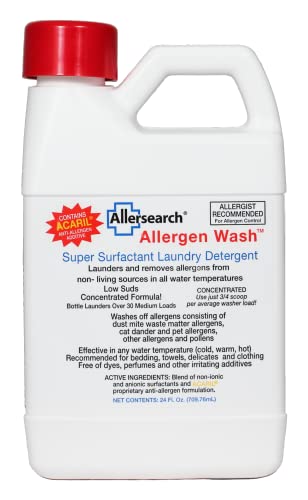
Allersearch sits in a different lane from the rest of this list. Where most sensitive-skin detergents focus on what they leave out, this one focuses on what it actively pulls out: dust mite waste matter, pet dander, and pollen. The active ingredient, ACARIL, is designed to denature (break down the protein structure of) those allergens so they rinse away in normal wash cycles.
That makes it a different tool for a different problem. Households with a child managing asthma or someone with a confirmed dust mite allergy may find the ECOS or Seventh Generation picks leave the underlying allergen untouched. AllergenWash directly targets that residue.
Real-World Strengths
- Targets specific allergens like dust mite matter, dander, and pollen rather than just avoiding irritants
- Works in standard wash temperatures, no need for sanitizing-hot 140°F cycles that fade fabrics
- Compatible with top-loaders, front-loaders, and high-efficiency machines
- Liquid format dissolves cleanly in cold water, preserving color and elasticity
Practical Considerations
- 24 oz bottle is smaller than the ECOS or Purex jugs, so you’ll reorder more often
- Specialty positioning means it costs more per ounce than general sensitive-skin detergents
- Best used as part of a broader allergy control routine, including mattress encasements and HEPA filtration
Best Suited To
Households with a diagnosed dust mite, pet dander, or pollen allergy where removing the allergen itself matters more than avoiding fragrance or dye.
Not Your Match When
Purex Natural Elements is the better fit for someone whose main concern is sensitive skin and stain cleaning on a tight budget without the allergen-targeting focus.
Purex Natural Elements goes after a specific shopper problem: sensitive skin on a large family’s wash schedule. The 82.5 oz bottle is a two-pack setup, totaling 165 loads, which means fewer reorder cycles and a lower per-wash cost than most competitors in the sensitive-skin aisle.
The formula is dye-free and built around naturally derived ingredients, though it’s worth noting “natural elements” here refers to the scent inspiration, not a clinical allergen-control claim. Where Allersearch actively targets dust mite allergens, Purex focuses on everyday cleaning for reactive skin.
Notable Upsides
- 165 combined loads across the two-pack supply stretch further per dollar than most sensitive-skin options
- Dye-free formula removes one of the most common contact irritants
- Liquid dissolves easily in cold water, protecting dark colors and stretch fabrics
- Ultra-concentrated format means smaller dose per load, so the bottle lasts
Honest Caveats
- The light scent, even if naturally inspired, may still bother shoppers with extreme fragrance sensitivity
- Heavy oil or grease stains may need a pre-treat, since this is positioned for everyday soil
- Two-pack shipping adds weight to the delivery, which may matter for curbside drop-offs
Quick Facts
Perfect Match For
Large families running multiple weekly loads who need a budget-friendly sensitive-skin formula without the allergen-targeting focus of a specialty product.
Look Elsewhere When
Seventh Generation Free & Clear is the better pick for shoppers who want a USDA-verified biobased formula (one made primarily from plant or renewable sources) and a tighter bottle footprint.
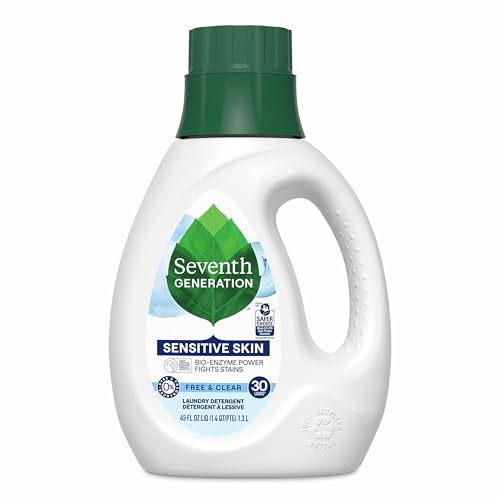
Seventh Generation’s Free & Clear formula has been a quiet fixture in the sensitive-skin aisle for years, and this 30-load bottle is the household trial size. The enzyme-rich blend (enzymes are targeted proteins that break down specific stain types like starches, oils, and grass) tackles the kind of everyday stains that show up on kid clothes and workout gear, while the formula itself stays free of dyes, fragrances, and artificial brighteners.
The USDA Certified 97% biobased label tells you most of the formula is built from plant and renewable sources, which matters to shoppers who weigh ingredient sourcing alongside skin compatibility. The 45 fl oz bottle is also easier to grip and pour than the bigger ECOS or Purex jugs, a real plus for smaller hands.
Real Benefits
- Enzyme-based stain fighting handles grass, food, and sweat without resorting to harsh additives
- USDA Certified 97% biobased appeals to ingredient-conscious shoppers
- Free of dyes, fragrances, and optical brighteners, the three additives most often flagged by dermatologists
- Compatible with HE and standard machines, so it works in older top-loaders and modern front-loaders alike
Worth Bearing In Mind
- 30-load count is smaller than the ECOS jug, so you re-up more often
- Cost per load sits higher than the Purex 2-pack or the ECOS 100-load jug
- Smaller bottle may not suit households running 8+ loads a week
Whose Shelf It Belongs On
Eco-minded households balancing sensitive skin with ingredient transparency who don’t mind paying a small premium for verified biobased sourcing.
A Better Fit Elsewhere
ECOS Free & Clear Liquid is the smarter call for shoppers who want dermatologist testing, a larger jug, and lower per-wash cost for the same dye and fragrance-free baseline.
What Matters Most When Choosing a Sensitive-Skin Detergent
Reading the Free & Clear Label
“Free and clear” has become a marketing catch-all, but the term usually signals the absence of added fragrance and dyes. For most reactive skin, those two are the biggest offenders. Dyes leave no functional cleaning benefit, and synthetic fragrances contain dozens of undisclosed compounds, several of which are common contact allergens. A genuinely free and clear formula should also skip optical brighteners, the additives that make whites appear whiter under UV light but can leave residue on sensitive skin.
Format Decisions: Liquid, Pak, or Powder
Liquid detergents tend to rinse cleanest, which is why they dominate the sensitive-skin aisle. Powders can leave residue if they don’t fully dissolve, especially in cold water. Power paks combine liquid and powder in a water-soluble film, which is convenient but locks you into a fixed dose. For households hand-washing delicates or running partial loads, a measurable liquid offers more control.
Allergen Control vs. Irritant Avoidance
Most formulas on this list focus on what they leave out: fragrance, dye, parabens, phosphates. Allersearch AllergenWash is the exception, actively breaking down dust mite allergens, pet dander, and pollen. Shoppers managing diagnosed allergies may want both approaches layered: a free and clear base formula for everyday loads, with the specialty detergent reserved for bedding, throws, and pet blankets.
Machine Compatibility
HE (high-efficiency) machines use less water, which means detergent has to dissolve and rinse in a smaller volume. All five options here are HE compatible, but cold-water performance varies. Liquids and paks generally dissolve faster than powders in 30°C or lower cycles, which matters for anyone washing delicates or dark colors on a cool setting.
Key Considerations Across These Picks
Common Shopping Slip Ups
Reactive skin often traces back to fabric softener or dryer sheets rather than the detergent itself, and shoppers sometimes swap detergents repeatedly without addressing those. A simpler diagnostic: wash a load with only the new detergent and no softener, then evaluate the skin response over several days. Another trap is assuming “natural” or “plant-based” automatically means hypoallergenic. Botanicals can still trigger contact dermatitis in sensitive individuals. Ingredient transparency matters more than the marketing label on the front of the bottle.
Where The Extra Money Goes
The price gap between a budget detergent and a specialty sensitive-skin formula reflects real costs: third-party certifications, clinical testing, smaller production runs, and stricter ingredient sourcing. For households with diagnosed allergies, that premium is often justified because the cost of a single bad reaction, in terms of dermatologist visits and lost sleep, dwarfs the per-wash difference. For mild sensitivity, a well-formulated value pick like Purex Natural Elements often delivers the same result at a lower cost.
Frequently Asked Questions
Do fragrance-free detergents actually clean as well as regular ones?
Yes. Fragrance adds no cleaning power; it’s purely a sensory addition. Modern free and clear formulas use the same surfactant chemistry (surfactants are the cleaning agents that break down and lift away oils and soil) as scented versions, so stain removal is comparable on everyday soil.
Is liquid or pak better for sensitive skin?
Liquid is generally the safer bet because it dissolves completely and rinses cleanly. Power paks work well too, but the dissolvable film occasionally leaves residue in machines that use very little water or run short cycles.
How often should I rewash bedding if I’m managing dust mite allergies?
Weekly hot washes above 130°F reduce dust mite populations, but they also fade fabrics. The Allersearch AllergenWash approach targets mite allergens in cooler water, letting you wash weekly without the fabric damage of high-heat cycles.
Can I use these detergents on baby clothes?
All five options here are free of dyes and fragrances, which covers the two additives pediatric dermatologists most often flag. For newborns with confirmed eczema, the ECOS and Seventh Generation picks are common starting points.
Will switching detergent fix my skin irritation right away?
Not always. Detergent residue in the washing machine, leftover fabric softener, and even your current towel stock can all contribute. A full transition usually takes two to three wash cycles per fabric item before you can fairly judge the new detergent.
Closing Remarks
Sensitive skin rewards consistency over experimentation. Pick a formula that matches your household size, your machine, and your specific trigger profile, then give it a few weeks to clear out the residue left by your previous detergent. The five options here cover the main scenarios most households face, from allergen control to budget-friendly volume, so the honest read is to start with the use case that fits your routine and adjust from there.
