

A good e-file changes everything about how nails get done. Acrylic removal that once meant twenty minutes of hand-filing becomes a few careful passes, and thick toenails stop being a chore. The catch is that the market is crowded, and the difference between a smooth, quiet machine and a wrist-shaking one comes down to details like bearing quality, torque, and speed control. This guide walks through eight options that cover the full range, from a cordless pedicure grinder to salon-grade 45,000 RPM machines, so you can match the tool to your actual workload instead of guessing.
A Side-By-Side Look
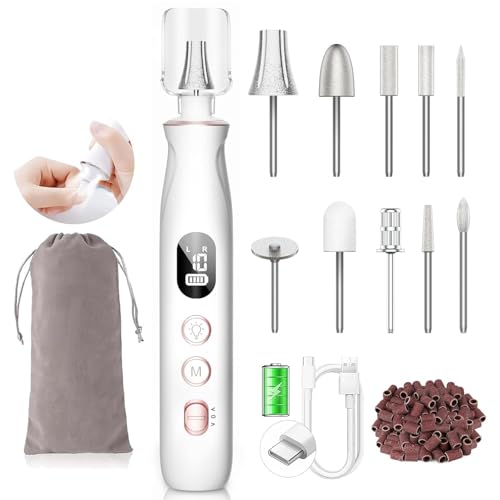
HSKAI Cordless Toe Nail Grinder 10-Speed with LED Lamp

Véfaîî JD700 Nail Drill 30000RPM

COSLUS E51 Portable Long-Lasting Electric Nail File

MEKK Professional Nail Drill 35000RPM E-File
Medicool TurboFile Electric Nail File (Older Model)
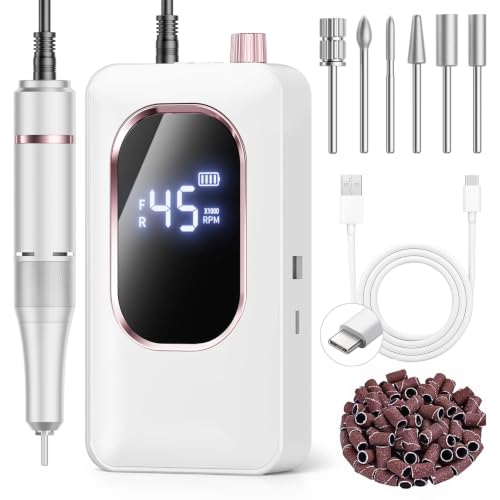
Hoxida Professional Nail Drill 45000RPM LCD Display

SAVILAND Electric Nail Drill 40000 RPM for Acrylic Removal

COSLUS E51 Electric Nail Drill for Nail Art Practice
The Picks, Examined More Closely
This one sits apart from the rest of the list because it is built for feet first, not acrylics. A cordless grinder with ten speeds and a built-in LED lamp makes short work of thick toenails and calluses, which matters most for anyone who struggles with clippers or has limited dexterity.
The rechargeable design means no cord dragging across the bathroom floor, and the included 50-piece manicure and pedicure accessory set covers shaping, buffing, and cuticle cleanup in one box. Think of it as a finishing tool that complements clippers rather than replacing them entirely.
Benefits That Matter
- Ten speed settings let you match intensity to tender or thickened nails without guesswork.
- The LED lamp lights up the work area, helpful for older eyes or dim bathrooms.
- A 50-piece bit and accessory set means you rarely need to buy extras separately.
- Cordless operation keeps pedicure sessions comfortable wherever you sit down.
Things To Consider
- Bits need regular cleaning after callus work to stay effective over time.
- Lower top speed than the pro e-files later in this list, so heavy acrylic removal is not its job.
Who It Suits Best
Home users focused on routine foot care, especially anyone dealing with thick or hard-to-trim toenails.
A Better Fit Elsewhere
Nail technicians working with acrylic should look at the Véfaîî JD700 instead, since its 30,000 RPM motor handles enhancement products this grinder was never designed to touch.
The JD700 has been around long enough to earn a reputation, and its spec sheet explains why. The 35W motor runs on Japanese-standard bearings with tight 0.02mm coaxiality, which is the measurement of how true the bit spins. Tighter coaxiality means less wobble, less vibration reaching your wrist during long fill appointments.
Ventilation channels in the handpiece help manage heat, so extended sessions on dense acrylic tend to stay comfortable. Compared with the HSKAI grinder above, this is a genuine enhancement-product machine, suited to dip powder, poly gel, and acrylic work rather than natural-nail grooming.
Positive Takeaways
- Precision bearings keep the bit running true, reducing wrist fatigue over a full day of clients.
- Built-in airflow helps the handpiece run cooler through back-to-back fills.
- Handles the full range of enhancement products, from soft gels to hard acrylic.
Minor Gripes
- Corded design ties you to an outlet, unlike the COSLUS models further down.
- Owners commonly report the chuck needs periodic tightening to grip bits firmly.
At A Glance
Made For
Intermediate home users and working techs who want proven, steady performance on enhancement products without paying flagship prices.
Reach For A Different Pick When
Speed-hungry professionals filing dense builder gel all day will find more headroom in the Hoxida 45,000 RPM model covered below.
Mobile nail techs know the problem: great corded drills exist, but house calls and pop-up booths rarely come with convenient outlets. The E51 answers that with a portable, battery-powered format aimed at serious enthusiasts and professionals who work away from a fixed desk.
The high-torque motor reaches 40,000 RPM with stepless speed adjustment, meaning you dial in any speed along the continuum rather than jumping between fixed steps. A smart LED readout shows your current setting at a glance. Its sibling, the COSLUS E51 practice model reviewed last, shares the platform but leans toward students.
Everyday Advantages
- Cordless freedom suits mobile appointments, travel kits, and cramped shared spaces.
- Stepless control gives finer tuning than stepped-speed budget drills.
- The LED display removes guesswork about where your speed is set mid-service.
- Developed with input from working nail technicians, according to the manufacturer.
Points To Note
- Battery-dependent tools need charging discipline before a full appointment day.
- Some buyers may find the compact body runs warmer than bench-top units during marathon sessions.
Right Fit For
Roving professionals and advanced hobbyists who prioritize portability without giving up pro-level speed.
Where Another Pick Suits Better
Stationary home studios that never leave the desk will get better value from the MEKK 35,000 RPM drill, which costs less and plugs in permanently.
Here is the sensible middle of the list. Thirty-five thousand RPM covers nearly every task a home studio throws at it, from soaking off gel polish to shaping fresh acrylic, and the manufacturer rates the motor for roughly 800 to 1,000 hours of service life. Spread across weekly use, that is years of ownership.
An LCD panel keeps speed visible while you work, and the controls are approachable enough for a confident beginner yet capable enough that many semi-pros stick with it. Next to the pricier Hoxida, you give up some top-end speed but keep the features that actually matter day to day.
Notable Gains
- Rated motor lifespan of 800 to 1,000 hours points to durable long-term value.
- 35,000 RPM ceiling handles both removal and detailed shaping comfortably.
- Approachable control layout works for beginners moving up from manual files.
Small Caveats
- Corded setup limits positioning compared with the COSLUS E51 portable.
- Dense builder gel may push this motor closer to its limit than a 40,000+ RPM unit.
The Numbers That Matter
Who Will Love This
Home-studio owners and nail students who want dependable professional-style power at a modest outlay.
Consider Something Else When
Anyone needing maximum RPM for thick sculptured nails should step up to the SAVILAND 40,000 RPM unit described next.
An honest note up front: this is a previous-generation TurboFile, no longer part of Medicool’s current lineup, and it lacks the silver handle of the newer version. That matters because brand loyalty still counts for something in this category, and Medicool has served salon professionals for decades.
For shoppers who already own compatible bits or simply trust the name, this older unit remains a functional choice. In our view, though, most people shopping fresh in 2026 will be better served by the current TurboFile II or by any of the newer machines on this list with modern displays and higher speed ceilings.
Advantages To Know
- Carries the Medicool name, long familiar in professional nail supply circles.
- Often available at a lower entry point than current-generation models.
- Straightforward operation suits users upgrading from manual files.
Worth Noting
- Discontinued status means replacement parts and accessories may become harder to source.
- No modern LCD readout or updated ergonomics found on newer rivals.
- Older stock can arrive with cosmetic wear, based on commonly reported experiences.
Whose Shelf It Belongs On
Loyal Medicool users replacing a worn unit or those specifically wanting this classic handle style.
Skip It When
First-time purchasers wanting current features will be happier with the Hoxida 45,000 RPM drill, which pairs modern specs with active product support.
Forty-five thousand RPM is the highest ceiling on this list, and that number translates directly into faster product removal when you are booked solid. The aluminum alloy motor housing and engineered ventilation keep heat, noise, and vibration down, which is exactly what you want at speeds this aggressive.
The LCD display adds precision to every session, letting you repeat exact settings between clients for consistent results. Against the MEKK reviewed earlier, you gain meaningful headroom for dense materials; against the SAVILAND coming next, you gain another 5,000 RPM of reserve power.
Real-World Strengths
- Top-tier speed shortens removal time on stubborn acrylic and hard gel.
- Aluminum alloy construction supports stable, cool-running performance.
- Vibration stays low even near maximum settings, easing wrist strain.
- LCD readout makes repeating a preferred speed effortless.
What To Weigh
- Beginners may find the upper speed range intimidating until technique develops.
- Bit quality matters more at this speed, so cheap bits amplify wobble noticeably.
Quick Facts
Who Should Grab It
Experienced professionals and ambitious home users who file dense enhancements regularly and want speed to spare.
Another Choice May Suit
Newcomers still learning pressure control will feel more comfortable starting on the COSLUS E51 practice model, whose gentler learning curve forgives early mistakes.
Removal is where this drill earns its keep. The carbon brush motor pushes to 40,000 RPM, and the maker positions it squarely at fast soak-off work, claiming thick gel nails come off dramatically quicker than with slower machines. Salons running back-to-back removal appointments are the obvious audience.
Speed alone does not tell the whole story, though. Torque under load is what keeps a bit from bogging down mid-pass on dense material, and the carbon brush design here prioritizes exactly that kind of sustained grunt. Compared with the Hoxida above, you trade a little top-end RPM for a motor tuned toward heavy removal duty.
Where It Excels
- Carbon brush motor holds torque under load, resisting stalls on thick product.
- 40,000 RPM makes quick work of gel and acrylic soak-offs.
- Tuned for the repetitive demands of professional removal services.
- Strong fit for dip powder and builder gel breakdown too.
Details To Watch
- Carbon brushes wear eventually and are a known service point on this motor type.
- Aggressive removal focus means finesse work benefits from a lighter touch and lower speeds.
Feature Snapshot
Built With In Mind
Working technicians whose appointment books are full of removal-heavy services and refills on dense enhancements.
Swap It Out When
Shoppers who want quieter, lower-maintenance operation may prefer the Véfaîî JD700, whose bearing-focused design emphasizes smoothness over raw removal speed.
This version of the E51 targets learners, and the difference shows in the feedback loop. The LCD panel displays speed, rotation direction, and remaining battery life simultaneously, so you always know what the tool is doing while your hands are busy practicing technique.
Battery life stretches from 12 to 20 hours depending on the speeds you favor, and a Type-C port refills the pack in about 2.5 hours, which conveniently matches the charger most people already own for other devices. Precision bearings cut vibration substantially versus standard drills, making early practice sessions far less shaky. It shares DNA with the portable E51 earlier in this list but frames itself around skill-building.
Notable Upsides
- Triple-readout LCD builds confidence by showing speed, direction, and charge at once.
- Up to 20 hours of runtime means weeks of typical practice between charges.
- Type-C charging uses the cable standard you likely already have on your desk.
- Reduced vibration helps beginners develop steady hands faster.
A Few Limitations
- Practice-oriented tuning means seasoned pros may outgrow it quickly.
- Battery capacity degrades gradually with frequent deep discharges, a common lithium-ion pattern.
Essential Details
The Right Fit
Students, hobbyists, and new home users building e-file skills on natural nails and light product work.
Not Your Match When
Professionals filing clients daily will extract more value from the SAVILAND 40,000 RPM drill, whose removal-focused motor suits commercial workloads better.
Choosing Well: What Actually Separates These Drills
Speed Is Only Part Of The Story
RPM numbers sell drills, but torque under load determines real-world performance. A 30,000 RPM motor with strong bearings will out-file a shaky 40,000 RPM unit on dense acrylic every time. Match the ceiling to your material: natural nails need very little, while sculptured gel rewards headroom.
Corded Versus Cordless Trade Offs
Corded machines deliver unlimited runtime and consistent power, which suits fixed studios. Cordless models buy freedom of movement at the cost of charging habits. Mobile techs should weigh battery runtime figures carefully, since a dead battery mid-appointment is a genuinely bad moment.
Vibration And Heat Decide Comfort
Bearing quality, motor housing material, and ventilation all feed into how a handpiece feels after an hour. Aluminum housings dissipate heat better than plastic, and tighter coaxiality means less buzz in your wrist. Your hands will thank you on long days.
Match The Tool To Your Workload
Removal-heavy schedules justify carbon brush motors and high ceilings. Practice and light grooming do not. Buying more machine than your calendar requires just means paying for capability that sits idle, so be honest about volume before choosing.
Key Considerations Across These Picks
Where Shoppers Go Wrong
The most common mistake is chasing the biggest RPM number on the box while ignoring vibration ratings and build quality. Another trap is buying a pro-grade machine before developing basic pressure control, which turns powerful tools into damaged nail beds quickly. Read the fine print on whether a model is a finishing tool or a full enhancement drill.
When Paying More Pays Off
Higher-tier drills spend their extra cost on bearings, aluminum housings, smarter displays, and refined motors. For someone filing clients several times weekly, those upgrades compound into comfort and speed worth having. Occasional home users, on the other hand, rarely notice the difference and are better served by the value tier.
Frequently Asked Questions
What RPM do professionals actually need?
Most salon work happens well below maximum speed, with removal tasks using the upper ranges. Anything from 30,000 to 45,000 RPM provides adequate headroom for acrylic and gel services.
Can a nail drill damage natural nails?
Yes, when used with excessive pressure or overly coarse bits at high speed. Light passes, gentle grits, and low speeds on natural nails keep the process safe.
Are cordless drills powerful enough for acrylic?
Modern cordless models like the COSLUS E51 reach 40,000 RPM and handle acrylic competently. Runtime planning matters more than raw power for these units.
How often do drill bits need replacing?
It depends on usage frequency and the materials being filed, but dull bits cause vibration and heat. Professionals typically swap worn bits regularly to maintain smooth performance.
Is a higher price always better in this category?
Not necessarily, since several affordable models here carry pro-level specifications. Build quality indicators like bearing type and housing material predict longevity better than price alone.
Bottom Line
Your workload should drive this decision more than any spec sheet. Home users focused on foot care will love the HSKAI grinder, students get a gentle start with the COSLUS E51 practice model, and working pros have strong choices in the Hoxida and SAVILAND depending on whether they prize top speed or removal torque. Whatever you choose, start slow, invest in decent bits, and let the tool do the work rather than forcing it.
