

Fine, thin strands punish every styling mistake. Too much heat, one extra pass, or a heavy plate and the hair flattens, fries, or splits before lunch. Choosing straighteners for fine thin hair means paying close attention to temperature range, plate material, and weight, because the wrong tool strips what little body you have.
A good match keeps heat low enough to avoid damage, glides without tugging, and stays light in the hand. The five picks below cover a range of budgets, hair lengths, and styling habits, from a quick morning brush to a precise root touch-up.
A Snapshot Of The Selections

TYMO Flat Iron 2 in 1 with 10s Heat-Up, 1-Inch Titanium Plate

SAOSA Mini Pencil Flat Iron 0.3″ Ultra-Thin Plates, Rose Gold

L’ANGE HAIR Smooth It 2-in-1 Straightener Brush, Blush
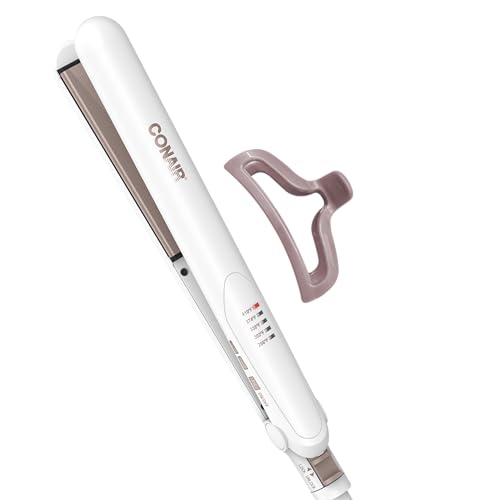
Conair Double Ceramic Straightener, 1″ Extra-Long Plates

ANNLARY 1 Inch Hair Straightener Flat Iron
A Closer Look At Each Pick
The TYMO SWAY lands at the top of the list because it handles almost every fine-hair scenario without overcomplicating things. A 1-inch titanium plate floats on a 3D pivot, so it stays in even contact with thin strands rather than clamping harder at the edges. Titanium conducts heat quickly, which means fewer passes and less cumulative damage on hair that punishes repeat exposure.
For most routines, the broad temperature range is the real win. A 10-second heat-up removes the morning wait, and the auto shut-off gives peace of mind during rushed mornings. You can dial down low for a gentle smoothing or push higher for thicker sections, which is useful if one person in the household has finer strands than another.
The Helpful Details
- 32 temperature settings from 140°F to 450°F let you start low and only climb when a section actually needs it.
- 3D floating plates reduce snagging, so thin strands don’t get yanked or bent mid-pass.
- 10-second heat-up cuts the cold-start wait on busy mornings.
- Titanium plate surface helps deliver one-pass results, lowering total heat exposure per session.
- Auto shut-off adds a layer of safety for people who routinely forget to unplug tools.
Points To Keep In Mind
- Titanium transfers heat very quickly, so users unfamiliar with high-conductivity plates should start at the lower end of the range.
- Plates sit on the wider 1-inch side, which may feel large around very short bobs or baby hairs near the temples.
Key Advantages
Best Suited To
Anyone who wants a single straightener for both straightening and curling, with enough temperature flexibility to handle different sections of fine hair.
Look Elsewhere When
The SAOSA Mini Pencil Flat Iron is a smarter pick for pixie cuts and very short hair, where the TYMO’s 1-inch plate is wider than needed.
The SAOSA Mini solves a problem most full-size straighteners ignore: hair that is too short for a 1-inch plate. The 0.3-inch pencil-style plates get close to the root, trace along baby hairs, and shape bangs without pressing a wide iron against the scalp. For pixie cuts, short bobs, and edges, that precision changes the result.
A ceramic tourmaline plate helps smooth the cuticle, which matters when fine hair is prone to frizz in humid bathrooms. Dual voltage means it works in different countries, and the included pouch and heat-resistant glove make it easy to toss in a carry-on. For most travelers, that kit removes the usual “do I really need to pack this” hesitation.
What Helps Most
- 0.3-inch plate is sized for short, fine sections where larger irons slip or bend strands.
- Ceramic tourmaline surface helps seal the cuticle, reducing visible frizz on fine hair.
- Dual voltage supports international use without a separate converter.
- Travel pouch and heat-resistant glove add practical value for on-the-go styling.
Honest Caveats
- The narrow plate makes straightening long hair slow, since each pass covers a small section.
- Lower temperature range starts at 190°F, so it offers less gentle-low-heat flexibility than models reaching down to 140°F.
- Owners commonly report that the included glove is helpful but the cord can feel short at standard outlet heights.
Whose Shelf It Belongs On
Anyone with short, fine hair, layered cuts, or a regular need to detail bangs and edges will find this format easier to control than a full-size iron.
Reach For A Different Pick When
The Conair Double Ceramic is a better fit for shoulder-length or longer fine hair, where its 1-inch extra-long plates cover more ground per pass.
Brush-format straighteners trade the clamping action of a flat iron for a glide-through approach that feels closer to brushing than styling. The L’ANGE HAIR Smooth It is built around that idea: you pull it through sections the same way you would with a paddle brush, and the heated element smooths the cuticle as the bristles detangle. For someone who never bonded with traditional flat irons, the learning curve is much shorter.
Advanced ionic technology emits negative ions, which help seal the cuticle and reduce frizz on fine, easily-poofy hair. Compared with the TYMO 2-in-1, this design focuses almost entirely on straightening rather than curling, so it suits people whose style goal is polished, smooth hair rather than waves. The brush form factor also makes it easier to use on second-day hair without re-sectioning every strand.
Useful Strengths
- Brush-style design is easier to learn than a traditional clamp, especially for first-time hot-tool users.
- Negative-ion output helps control frizz, a common frustration for fine hair that picks up humidity fast.
- Root-to-tip styling reduces the need to separate and clip small sections.
Soft Spots
- Less effective at creating curls or bends compared with the TYMO 2-in-1.
- Brush plates may not press as evenly as a floating flat-iron plate on very thick or coarse sections.
- Cleaning the bristle area takes more care than wiping down smooth flat-iron plates.
Right Fit For
Mornings where you want a smooth, straight look without the precise sectioning that traditional flat irons require.
Swap It Out When
The ANNLARY 1 Inch Flat Iron is the stronger choice if you regularly style curls or waves and want a more versatile two-in-one tool.
The Conair Double Ceramic is the practical workhorse of the list. The extra-long plate length means each pass covers more hair, which shortens styling time on longer fine hair that otherwise takes repeated clamping to smooth. Double ceramic construction distributes heat across the plate more evenly than a single-layer surface, helping reduce hot spots that scorch thin strands.
For most fine-hair users, this is the kind of tool that disappears into the routine. It heats up, does the job, and doesn’t ask you to learn a new technique. The trade-off is fewer advanced features than the TYMO, so shoppers wanting a wide temperature range or auto shut-off may need to look elsewhere. As a baseline everyday option, however, it covers the core task without complications.
A Strong Showing
- Extra-long plates speed up styling on long, fine hair by covering more area per pass.
- Double ceramic surface distributes heat more evenly to reduce scorching on thin strands.
- 1-inch plate width is a versatile middle ground for most hair lengths.
- Simple controls make it approachable for users who don’t want extra settings to manage.
Trade Offs
- Fewer advanced features than higher-priced models, such as auto shut-off and extended temperature options.
- Owners commonly report that the plate length can feel unwieldy on shorter bobs.
- Standard ceramic, not tourmaline-infused, so very frizz-prone hair may need a finishing product.
Made For
Long, fine hair that benefits from wide-plate coverage and an uncomplicated daily tool.
Skip It When
The SAOSA Mini Pencil Flat Iron is a better match for short hair, where long plates become more hindrance than help.
The ANNLARY 1 Inch Flat Iron rounds out the list with a focus on heat recovery. A dual-PTC heater (PTC, or Positive Temperature Coefficient, is a self-regulating heating element) brings the plates back to the set temperature faster than typical single-PTC designs, which matters when you pause mid-section or take longer passes through thicker areas. For frequent stylers, that recovery speed reduces the “almost hot enough” guesswork.
Versatility is the second pillar. 3D floating plates keep contact even across the strand, and the 2-in-1 design handles both straight looks and softer curls. Fine-hair users who want one tool that does both jobs, rather than keeping a dedicated curler around, may find this balance appealing. It is positioned as a step up from basic flat irons without the price jump of premium titanium models.
What Makes Sense
- Dual-PTC heaters recover set temperature quickly, which helps during longer styling sessions.
- 3D floating plates reduce snagging and re-passes on fine, easily-damaged hair.
- 2-in-1 functionality covers both straightening and curling in a single tool.
Things To Weigh
- Not as feature-rich as the TYMO 2-in-1, which offers more temperature increments and a faster 10-second heat-up.
- Heavier plate housing may cause fatigue during extended styling sessions.
Feature Snapshot
Who Should Grab It
Stylers who frequently switch between straight and curled looks and want faster heat recovery between sections.
Consider Something Else When
The L’ANGE HAIR Smooth It Brush is a better fit for those who prefer a brush-style glide over a traditional clamp, especially for fast morning touch-ups.
What Matters Most Before Choosing Straighteners for Fine Thin Hair
Temperature Range and Starting Low
Fine hair rarely needs the upper end of a straightener’s heat range. A model that starts at 250°F or lower, like the TYMO’s 140°F floor, gives you room to work gently. The lowest effective temperature is the one that smooths the cuticle without crisping the strand. Higher settings should be reserved for the occasional stubborn section, not everyday use.
Plate Material and Width
Titanium and ceramic tourmaline each behave differently. Titanium heats fast and runs hot, which is useful for one-pass results but punishing if held too long. Ceramic distributes heat more gently and is often the safer default for thin hair. Plate width matters too: a 1-inch plate is versatile, while 0.3-inch pencil plates are sized for short cuts and edges.
Weight and Plate Length
A heavy straightener pulls on the wrist and encourages longer passes to “get it over with,” which raises heat exposure. Lightweight tools let you work in smaller sections at lower temperatures. Extra-long plates speed up long hair but become awkward on short cuts, so match plate length to hair length rather than picking the biggest option available.
Styling Format: Brush vs Flat Iron
Brush-style tools like the L’ANGE HAIR Smooth It are easier for beginners but limited to straight styles. Traditional flat irons offer more versatility, including curls and bends, and generally deliver more precise root-to-tip results. Choosing between them comes down to whether ease or versatility matters more in your routine.
Key Considerations Across These Picks
Mistakes Worth Dodging
A common error is buying a high-heat tool and running it at maximum from day one. Fine hair responds to lower temperatures, and many users damage their strands before realizing the tool is capable of gentler output. Another trap is choosing a plate width that doesn’t match hair length: long plates on short hair cause bending and creasing, while narrow plates on long hair make styling slow and tedious.
Where The Extra Money Goes
Higher-tier models like the TYMO typically justify their cost with faster heat-up, wider temperature ranges, and better plate engineering such as 3D floating designs. The upgrade is worth it for people who style frequently, want one tool to handle multiple looks, or value the safety of auto shut-off. For occasional touch-ups or short hair, a basic model like the Conair covers the task without the extra features.
Frequently Asked Questions
What temperature is safe for fine thin hair?
Most fine hair responds well to temperatures between 250°F and 300°F, with 350°F reserved for stubborn sections. Staying below 300°F for everyday use helps reduce cumulative damage over time.
Are ceramic or titanium plates better for fine hair?
Ceramic plates distribute heat gently and are often the safer default for thin strands. Titanium plates heat faster and deliver one-pass results, but they require more attention to avoid overheating fine hair.
How often should fine hair be straightened?
Limiting heat styling to two or three times per week gives strands time to recover. Using a heat protectant and the lowest effective temperature extends that window without visible damage.
Can a straightener also curl fine thin hair?
Yes, most flat irons, including the TYMO and ANNLARY models, can create soft waves and defined curls. Brush-style tools like the L’ANGE HAIR Smooth It focus on straightening and do not perform well as curlers.
Is a mini flat iron worth it for short fine hair?
For pixie cuts, bobs, and edge work, a mini flat iron like the SAOSA is often more practical than a full-size model. The narrow plate reaches the root and shapes short sections without bending strands.
Closing Remarks
The right straightener for fine thin hair is the one that matches your hair length, your styling habits, and your tolerance for learning a new tool. Heat control and plate width do most of the heavy lifting, so prioritize those over feature lists. Start low, work in small sections, and let the tool earn a place in your routine rather than the other way around.
