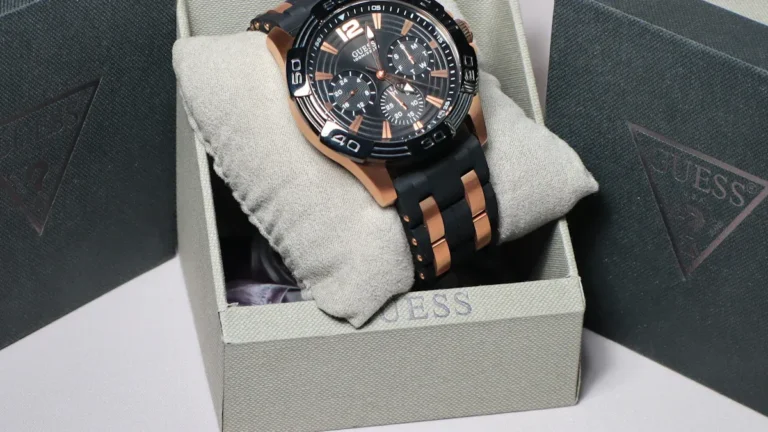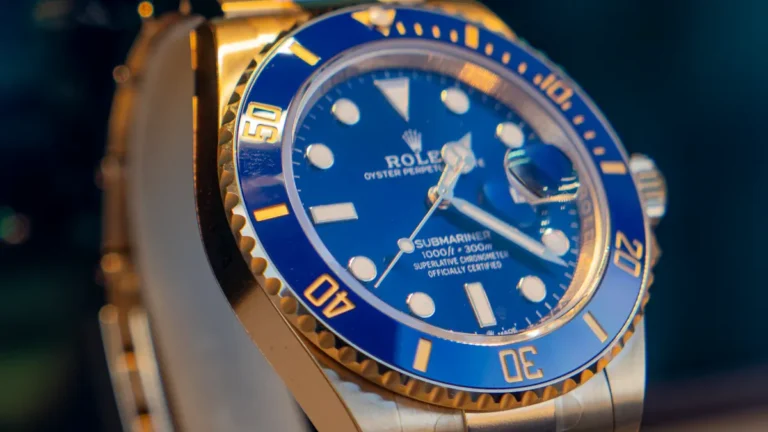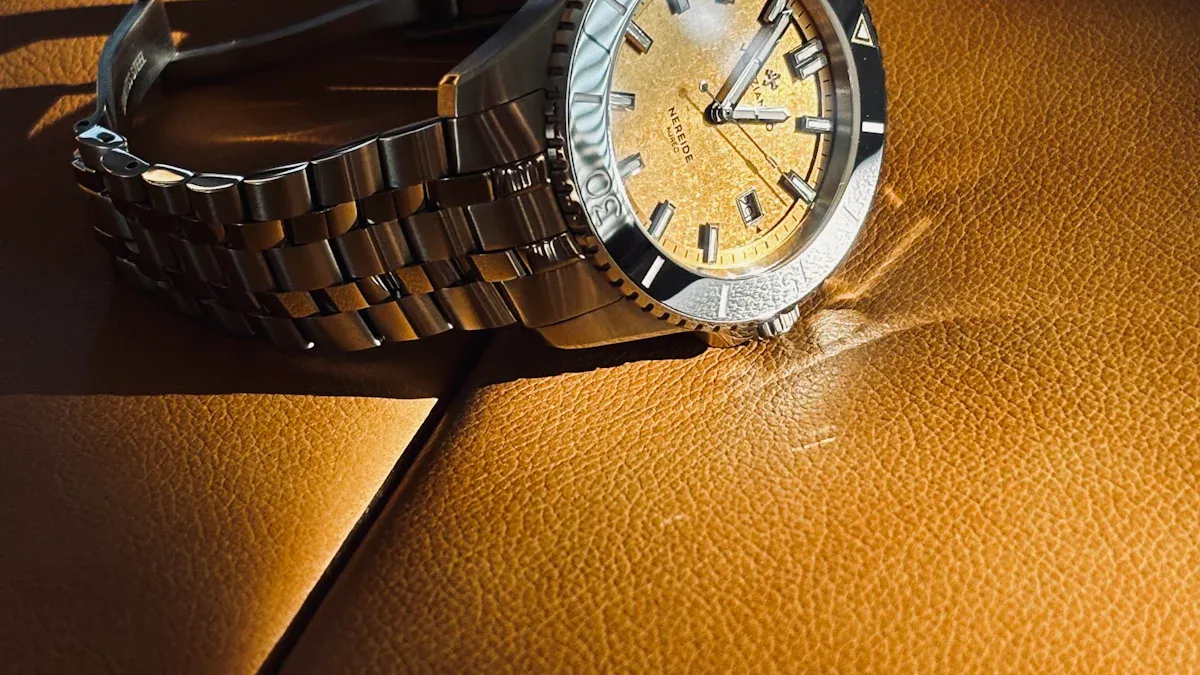
When choosing a watch, the material plays a crucial role in defining its durability, style, and comfort. Whether you’re a watch enthusiast or just looking for a reliable accessory, understanding the different watch materials can help you make an informed choice. Here are some key points about popular materials:
Stainless Steel: Known for its durability and classic look, stainless steel is a favorite among many. It may feel heavy on larger watches, but its timeless appeal is hard to beat.
Titanium: This lightweight option offers great corrosion resistance, making it comfortable for daily wear. However, be cautious as it can scratch more easily.
Ceramic: With its modern aesthetic, ceramic is scratch-resistant and stylish. Just keep in mind that it can be fragile if dropped.
Leather: A classic choice for watch straps, leather provides comfort and elegance but requires care to maintain its appearance.
Choosing the right material can enhance the longevity of your timepiece and reflect your personal style.
Key Takeaways
Stainless steel offers durability and a classic look, making it ideal for everyday wear.
Titanium is lightweight and hypoallergenic, perfect for those with sensitive skin and active lifestyles.
Ceramic is scratch-resistant and stylish, often found in luxury watches, but can be brittle if dropped.
Leather provides comfort and elegance, but requires regular maintenance to keep it looking good.
When choosing a watch, consider your lifestyle and how you plan to use it to find the best material for your needs.
Stainless Steel Watches
Properties of Stainless Steel
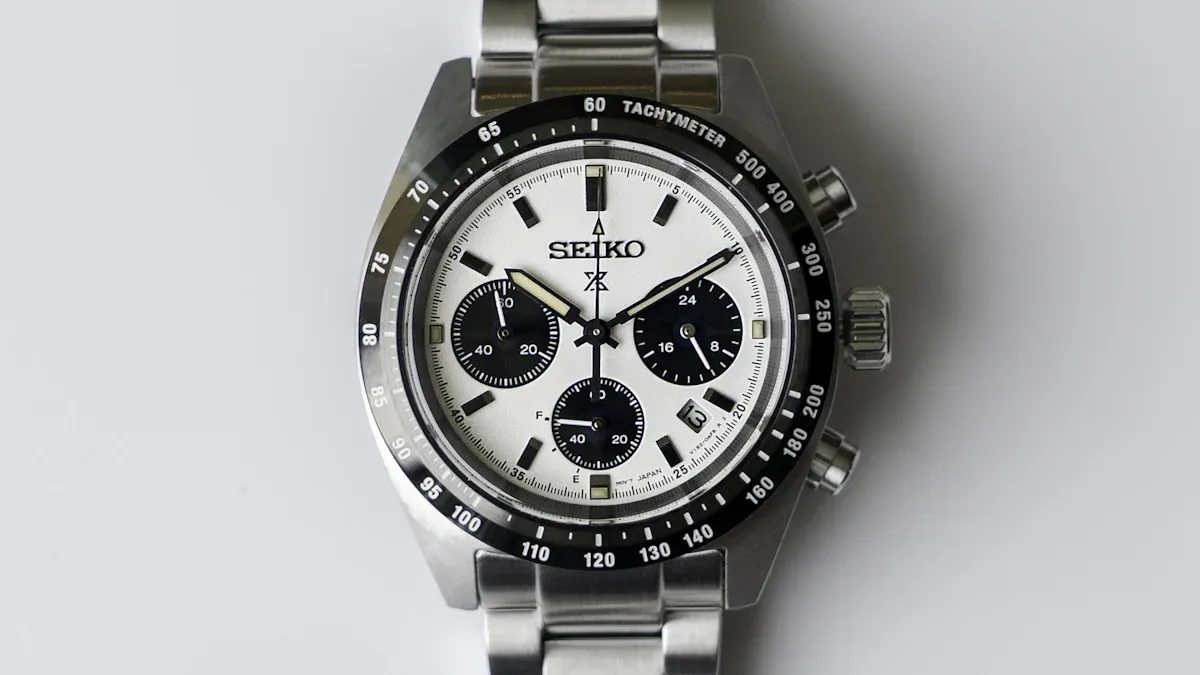
Stainless steel is a popular choice for watchmaking due to its unique properties. This metal alloy primarily consists of iron, carbon, and at least 10.5% chromium. The chromium content gives stainless steel its remarkable resistance to tarnishing and corrosion. You’ll often find different grades of stainless steel in watches, each with its own characteristics. Here’s a quick look at some common grades:
Grade | Composition Details |
|---|---|
316L | Contains molybdenum, enhancing corrosion resistance, ideal for everyday wear. |
904L | Higher nickel, chromium, and molybdenum content, preferred for luxury watches. |
316LVM | Lower carbon content, hypoallergenic, suitable for sensitive skin. |
Advantages of Stainless Steel
Stainless steel watches come with several advantages that make them a favorite among watch enthusiasts:
Exceptional Durability: They resist scratches and dents, ensuring your watch looks great for years.
Corrosion Resistance: These watches can withstand various environments, including humid conditions.
Low Maintenance: You won’t need to polish them often. A simple wipe with a cloth keeps them looking pristine.
Built to Last: Their robust nature means they can endure daily wear and tear without losing their charm.
Disadvantages of Stainless Steel
While stainless steel has many benefits, it’s not without its drawbacks:
Susceptibility to Scratches: Although durable, they can still get scratched, especially if you wear them during rough activities.
Weight: Stainless steel watches can feel heavier compared to lighter materials like titanium.
Best Uses for Stainless Steel
Stainless steel is versatile, making it suitable for various watch styles. You’ll find it in everything from casual everyday watches to high-end luxury timepieces. Its durability and classic look make it an excellent choice for both formal and informal occasions. Whether you’re diving into the ocean or attending a business meeting, a stainless steel watch can complement your style while standing up to the elements.
Titanium Watch Materials
Properties of Titanium
Titanium is a remarkable material for watchmaking, known for its unique properties. Here’s a quick overview of what makes titanium stand out:
Property | Description |
|---|---|
Lightweight | Titanium watches are significantly lighter than steel, reducing wrist fatigue and enhancing comfort. |
Strength-to-Weight Ratio | Offers similar or greater tensile strength compared to stainless steel while being much lighter. |
Corrosion Resistance | Forms a protective oxide layer, making it resistant to saltwater, perspiration, and chemicals. |
Hypoallergenic Properties | Rarely causes skin reactions, making it suitable for those with metal allergies. |
Aesthetic Appeal | Features a unique matte gray finish that distinguishes it from other metals. |
Thermal Comfort | Lower thermal conductivity provides a warmer feel against the skin and greater comfort in varying climates. |
Advantages of Titanium
You’ll find several advantages when choosing titanium for your watch:
Lightweight Comfort: Titanium watches feel almost weightless on your wrist, making them perfect for all-day wear.
Durability: They resist corrosion and wear, ensuring your watch remains in great condition.
Hypoallergenic: If you have sensitive skin, titanium is a great choice. It rarely causes allergic reactions, unlike some other metals.
Stylish Look: The matte finish of titanium gives your watch a modern and sleek appearance.
Disadvantages of Titanium
However, titanium does have some drawbacks:
Scratch Susceptibility: While strong, titanium can scratch more easily than stainless steel. You might want to be cautious during rough activities.
Higher Cost: Titanium watches often come with a higher price tag due to the complex machining required. Prices typically start around $249, compared to about $179 for stainless steel bands.
Best Uses for Titanium
Titanium is ideal for various watch styles. You’ll often see it in sports watches, diving watches, and luxury models. Brands like Longines and Grand Seiko utilize titanium for its cutting-edge performance and durability. Whether you’re hiking, swimming, or attending a formal event, a titanium watch can handle it all while looking stylish.
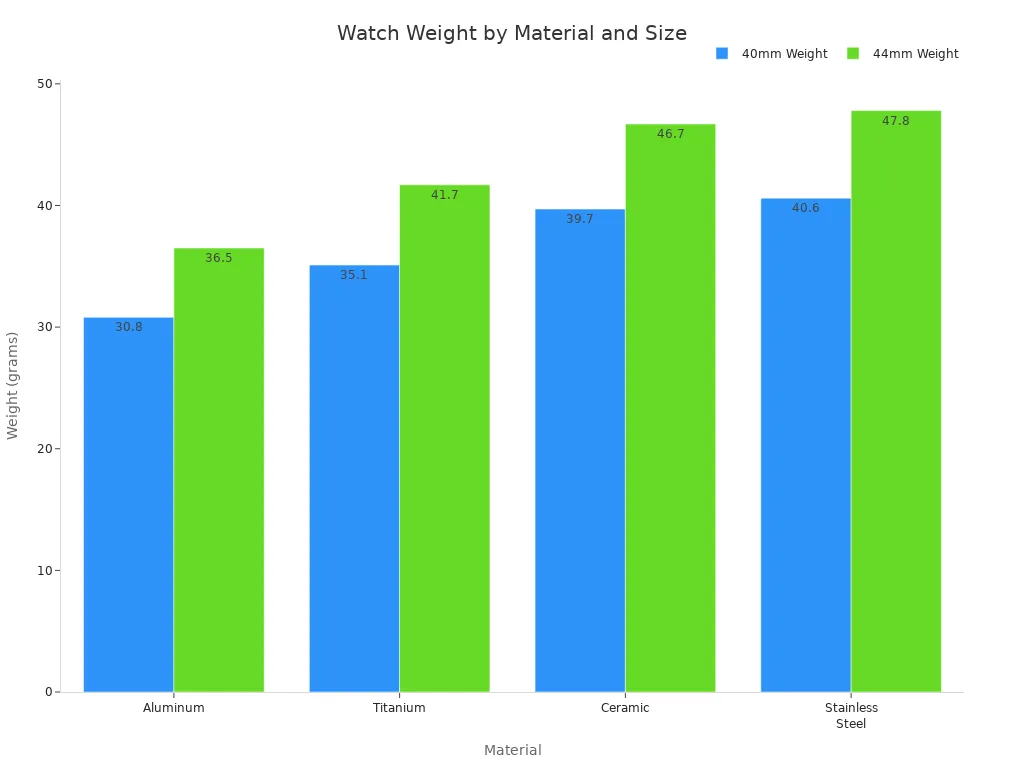
With its strength without the weight, titanium truly shines as a watch material.
Ceramic Watch Cases
Properties of Ceramic
Ceramic is a fascinating material used in watchmaking. It boasts several impressive properties that make it a popular choice for watch cases. Here’s a quick overview:
Property | Description |
|---|---|
High hardness | Excellent scratch resistance |
High-temperature resistance | Colors will not fade |
Lightweight | Easy to wear |
Hypoallergenic | Contains no metals |
Good oxidation resistance | Resists corrosion |
Smooth surface | Gentle on the skin and pleasant to touch |
Brittleness | Can crack or chip if dropped on a hard surface |
Advantages of Ceramic
You’ll find that ceramic watches come with several advantages:
Hypoallergenic: Since ceramic contains no metals, it’s perfect for those with sensitive skin or allergies. In hot climates, it doesn’t release metal ions into your skin, reducing allergy risks.
Durability: The high hardness of ceramic provides excellent scratch resistance, keeping your watch looking new for longer.
Aesthetic Appeal: Ceramic watches often feature a sleek, modern look that can elevate your style. They come in various colors and finishes, allowing you to express your personality.
Disadvantages of Ceramic
However, ceramic isn’t without its downsides:
Brittleness: Ceramic watches can be quite brittle. If you drop one on a hard surface, it might shatter or crack, requiring a complete replacement.
Repair Costs: Unlike stainless steel watches, which may only get dented, a shattered ceramic case necessitates an expensive full case replacement.
Best Uses for Ceramic
Ceramic has become a prominent choice in luxury watchmaking. Brands like Omega, Audemars Piguet, and IWC have embraced this material for its unique properties. You’ll often see ceramic in high-end models, where both durability and appearance matter. Whether you’re looking for a sporty watch or a sophisticated timepiece, ceramic can meet your needs while providing a stylish edge.
Ceramic watches combine modern technology with timeless elegance, making them a fantastic addition to any collection.
Leather Watch Straps
Properties of Leather
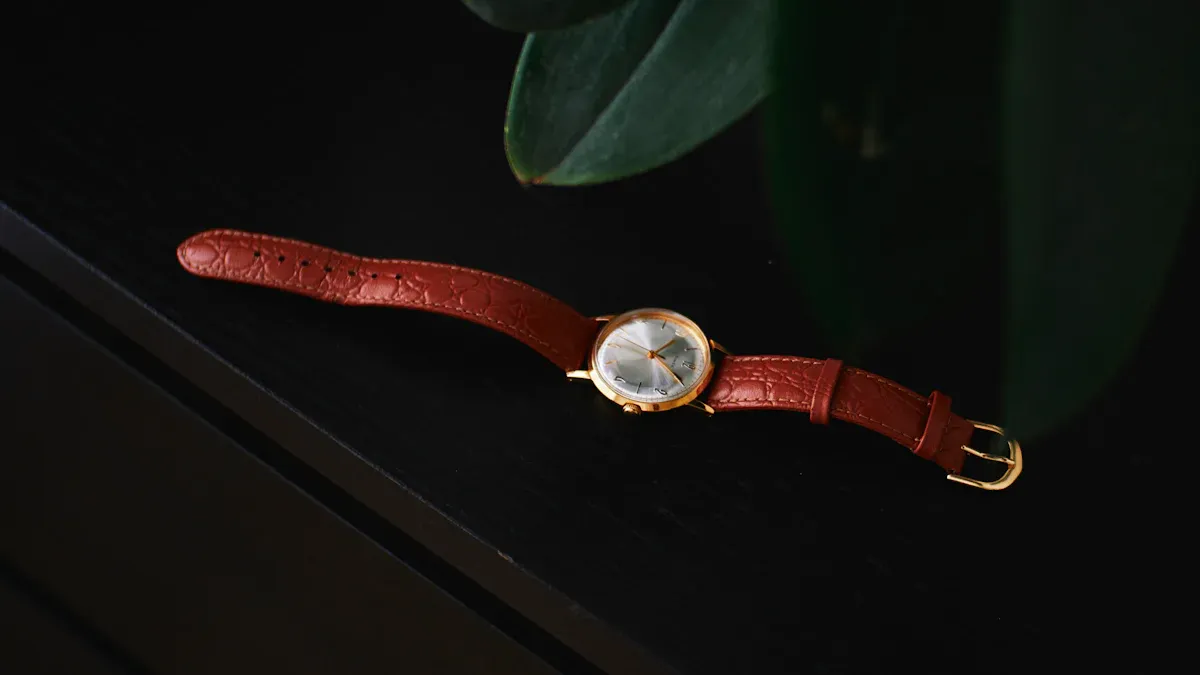
Leather is a classic material that adds elegance to any watch. It comes from animal hides, primarily cowhide, but you can also find exotic options like alligator or ostrich. Here are some common types of leather used in watch straps:
Type of Leather | Characteristics | Source/Notes |
|---|---|---|
Silicone-lined Leather | Combines elegance with durability and flexibility; moisture resistant. | Suitable for various occasions. |
Aniline Leather | Dyed with soluble dyes, retains natural grain; luxurious appearance. | Vulnerable to scratches and stains. |
Distressed Leather | Vintage look; unique charm with variations in color and texture. | Popular for rugged aesthetics. |
Perforated Leather | Features holes for breathability; stylish and sporty. | Requires regular cleaning. |
Vegetable-Tanned Leather | Eco-friendly; develops a unique patina over time. | Susceptible to water damage. |
Advantages of Leather
Leather watch straps offer several benefits that make them a popular choice:
Comfort: Leather molds to your wrist over time, providing a personalized fit.
Style: The classic look of leather adds sophistication to both casual and formal watches.
Variety: You can find leather in many colors and textures, allowing you to express your style.
Disadvantages of Leather
However, leather does have its downsides:
Water Sensitivity: Leather is less water-resistant than metal, making it unsuitable for wet activities. Prolonged exposure to moisture can deteriorate the quality of the leather.
Maintenance Needs: Leather requires regular care to maintain its appearance and comfort. Without proper maintenance, it can crack and deteriorate over time.
Longevity: Leather tends to wear out eventually and is prone to fraying and fading. Daily wear may necessitate replacement within a few years.
Best Uses for Leather
Leather straps are perfect for various watch styles, especially dress and vintage watches. Their classic appeal makes them ideal for formal occasions, while distressed leather adds a rugged charm to casual looks. You’ll often see leather straps on high-end watches, emphasizing luxury and craftsmanship.
Comparing Watch Materials
Durability Comparison
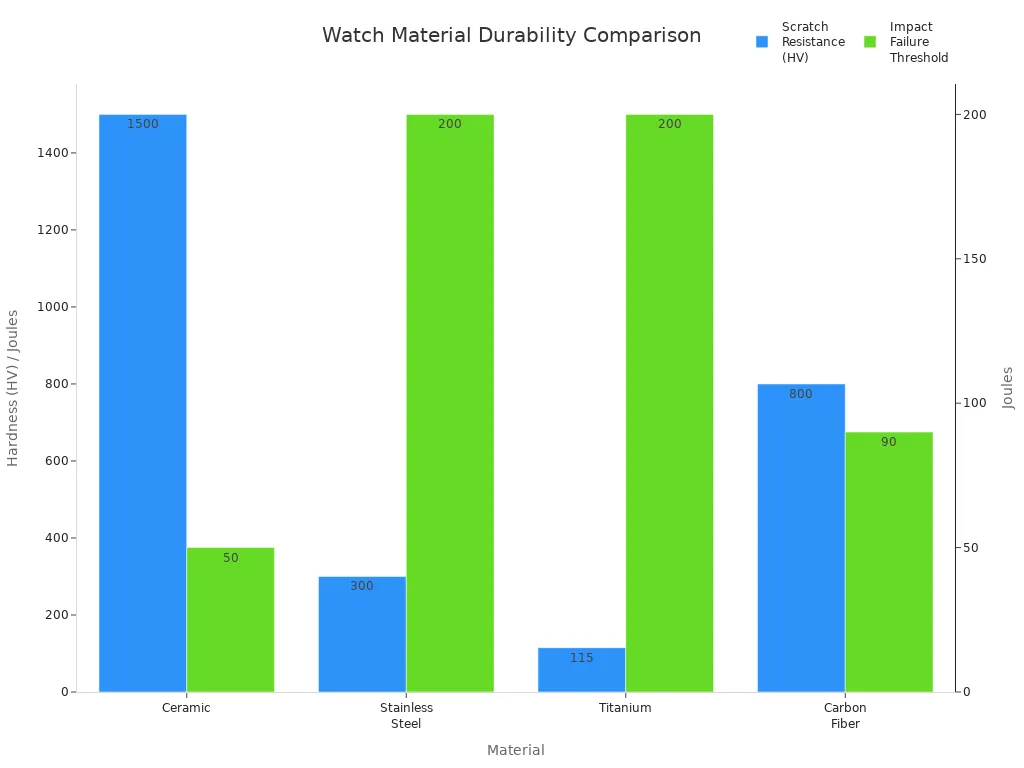
When it comes to durability, each material has its strengths and weaknesses. Here’s a quick look at how they stack up against each other:
Material | Scratch Resistance (HV) | Impact Failure Threshold |
|---|---|---|
Ceramic | 1500+ HV | 50 joules |
Stainless Steel | 300 HV | 200 joules |
Titanium | 80–150 HV | 200 joules |
Ceramic shines with its high scratch resistance, making it ideal for those who want a watch that stays looking new. However, it can crack under impact, fracturing five times faster than titanium.
Stainless steel offers a solid balance of durability and resistance to wear. It withstands daily use well but shows more hairline scratches over time compared to titanium.
Titanium is lightweight and strong, dispersing energy effectively during impacts. It outperforms stainless steel by 30% in drop simulations, making it a great choice for active lifestyles.
Comfort Comparison
Comfort is crucial when choosing a watch. You want something that feels good on your wrist throughout the day. Here’s how the materials compare:
Titanium is often favored for its lightweight nature. Many users report that it feels almost weightless, making it perfect for all-day wear.
Stainless steel has a traditional feel and heft that some people appreciate. However, it can feel heavier, especially on larger watches.
Ceramic and leather don’t have specific user reviews available, but leather is known for molding to your wrist over time, providing a personalized fit.
Aesthetic Comparison
Aesthetics play a significant role in your choice of watch material. Here’s a breakdown of how each material is perceived:
Material | Characteristics |
|---|---|
Stainless Steel | Durable and budget-friendly |
Titanium | Lightweight and long-lasting |
Ceramic | Highly scratch-resistant but usually more expensive |
Leather | Offers elegance |
Stainless steel is commonly used for its durability and resistance to corrosion. It fits well in both casual and formal settings.
Titanium provides a modern look with its unique matte finish, making it popular in sports and aviation watches.
Ceramic is often seen in luxury models, offering a sleek and stylish appearance that stands out.
Leather adds a classic touch, perfect for dress watches and vintage styles.
Choosing the right material depends on your personal style and how you plan to use your watch. Whether you prioritize durability, comfort, or aesthetics, understanding these materials helps you make an informed decision.
Choosing the right watch material can enhance your experience and reflect your style. Here’s a quick recap:
Stainless Steel: Durable and classic, perfect for everyday wear.
Titanium: Lightweight and hypoallergenic, great for active lifestyles.
Ceramic: Scratch-resistant and stylish, ideal for luxury watches.
Leather: Offers comfort and elegance but requires maintenance.
When selecting a watch, consider your lifestyle. Ask yourself: Will you use it for sports or formal events? Set a budget and evaluate comfort. Remember, the right watch should fit your needs and make you feel good wearing it.
Tip: Research brands and check for warranties to ensure you make a wise investment!
FAQ
What is the best material for a watch?
The best material depends on your needs. If you want durability, stainless steel is great. For lightweight comfort, consider titanium. If you prefer a modern look, ceramic is stylish. Leather offers classic elegance but requires more care.
How do I maintain my leather watch strap?
To maintain your leather strap, clean it regularly with a soft cloth. Avoid exposing it to water and moisture. Use leather conditioner occasionally to keep it supple and prevent cracking.
Are ceramic watches fragile?
Yes, ceramic watches can be brittle. While they resist scratches well, they may crack or chip if dropped on a hard surface. Handle them with care to ensure longevity.
Can I wear a titanium watch while swimming?
Absolutely! Titanium watches are highly resistant to corrosion, making them suitable for swimming and other water activities. Just ensure the watch is rated for water resistance.
How do I choose the right watch material for my lifestyle?
Consider your daily activities. If you lead an active lifestyle, titanium or stainless steel may suit you best. For formal occasions, leather or ceramic can add a touch of elegance. Think about comfort and style too!